
45 Seater Coach Rental Singapore for Group Moves
22 July 2026
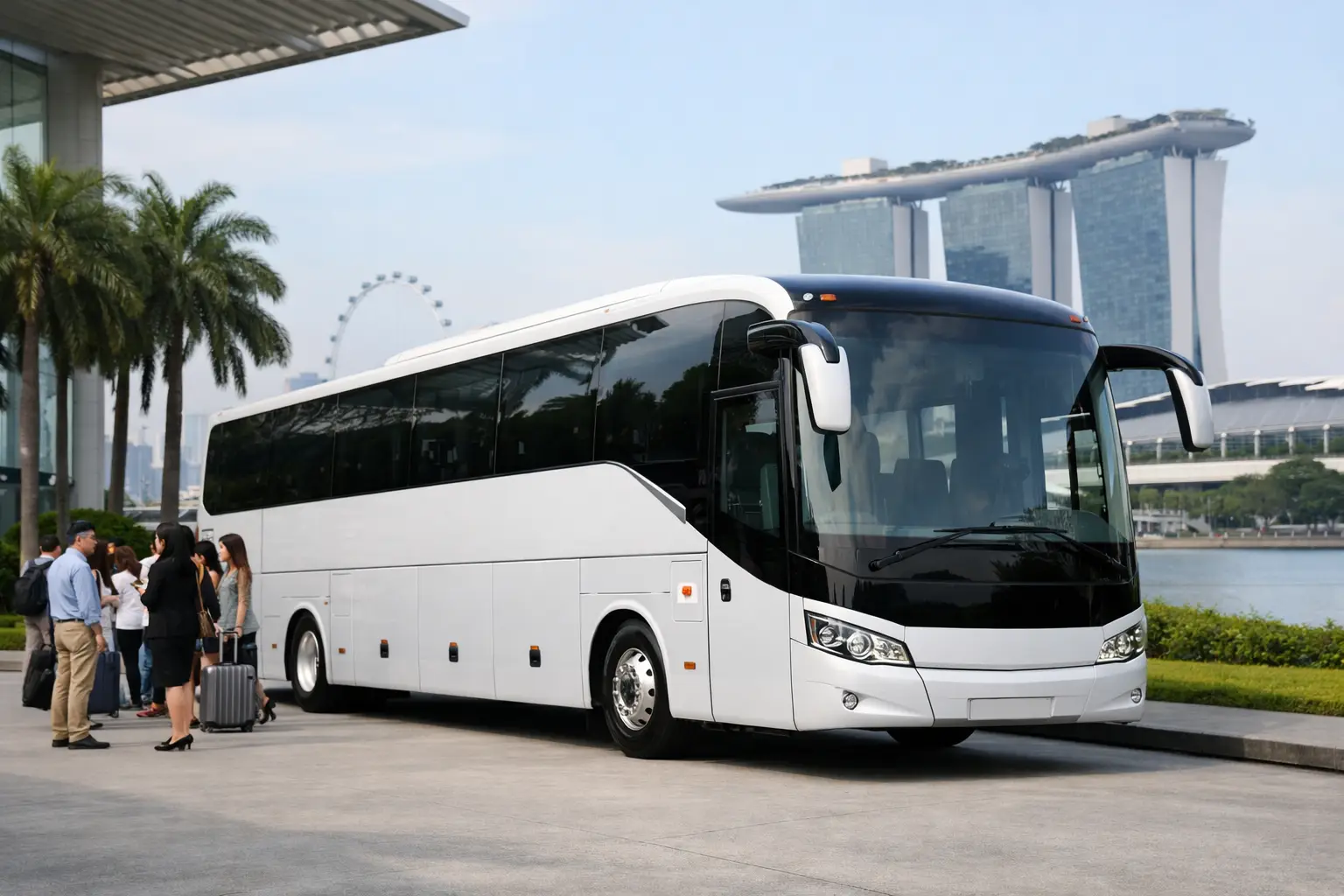
A 45 seater coach rental Singapore is often the right answer when a group is too large for MPVs and minibuses, but too important to leave to multiple uncoordinated rides. For a conference delegation, employee outing, airport arrival wave, or private function, one full-size coach creates a single movement plan, one departure schedule, and a clearer point of accountability.
The vehicle itself is only part of the decision. Group transport succeeds when passenger numbers, luggage, pickup timing, venue access, route planning, and dispatch control have been considered before the coach arrives. That is particularly relevant in Singapore, where hotel driveways, convention centers, business parks, and event venues can have different access rules and loading windows.
When a 45-Seater Coach Is the Right Fit
A 45-seat coach is designed for substantial group movements that need more capacity than a mini coach can reasonably provide. It works well for corporate groups traveling between a hotel and a conference venue, staff transport on a fixed route, school or association outings, wedding guest transfers, and sightseeing programs with a defined itinerary.
For airport transfers, the key question is not simply whether there are 45 passengers. It is whether the group is arriving on the same flight schedule and how much luggage they are carrying. A coach may accommodate the passenger count, while oversized cases, exhibition materials, golf bags, or equipment cases require a separate luggage vehicle or a reduced passenger load. A properly scoped plan avoids the common mistake of treating every seat as available baggage capacity.
It is also worth considering the value of keeping the group together. For a visiting executive delegation, splitting passengers across several smaller vehicles can create staggered arrivals, missed briefings, and unnecessary coordination work. A dedicated coach keeps the itinerary visible and the group moving as one unit.
What to Confirm Before Booking a 45 Seater Coach Rental Singapore
The most useful coach quotation begins with operational details, not a vague request for a bus. Provide the service date, estimated passenger count, pickup and drop-off locations, required reporting time, final release time, and the planned stops in between. If the movement is recurring, include the days of operation and expected variation in headcount.
Passenger Count and Luggage Profile
Ask whether 45 passengers is the actual number expected to travel or the maximum possible attendance. If the group has 38 confirmed travelers but several may join later, a 45-seater provides sensible buffer. If all 45 seats will be filled, the luggage profile becomes more important, especially for airport and hotel movements.
A business delegation traveling light for a city transfer has different requirements from an inbound group carrying checked baggage. Share this information early. It allows the transport provider to recommend whether the coach is sufficient on its own or whether additional support is prudent.
Timing, Waiting, and Multiple Stops
A one-way transfer is straightforward. A program with hotel pickup, a morning venue arrival, lunch transfer, an afternoon site visit, and evening return requires vehicle and chauffeur time to be planned as a full duty period. The coach may remain on standby, reposition between locations, or be scheduled for later collection depending on the itinerary and access conditions.
Build realistic boarding time into the schedule. Moving 45 people through a hotel lobby or convention center entrance takes longer than loading a small executive group. For a critical presentation, gala dinner, or flight departure, it is better to set the coach reporting time earlier than to rely on every attendee arriving at the pickup point at the same minute.
Venue Access and Route Restrictions
Singapore is highly connected, but large vehicles still need workable access. Some office towers have controlled loading areas, hotels operate coach bays at specific times, and certain event sites require vehicle registration or advance parking arrangements. A coach cannot always wait at the curb while passengers assemble.
Share venue instructions, loading dock requirements, organizer contacts, and any known road closures with the transport coordinator. For large-scale programs, route review and dispatch oversight are not administrative extras. They are how the pickup plan stays intact when traffic, security procedures, or an event schedule changes.
Common Uses for a 45-Seat Coach
Corporate and MICE movements are among the most frequent applications. A full-size coach can move conference attendees from a hotel cluster to a convention venue, transport delegates to an off-site dinner, or operate a scheduled shuttle between an office and a business park. In these cases, consistency matters as much as capacity. The same pickup point, signage plan, reporting time, and passenger communication should be used throughout the program.
For employee transport, a coach can support fixed morning and evening routes, temporary relocation shuttles, training-day travel, and company events. The right structure depends on whether riders need assigned stops, a single collection point, or a route that changes by shift. A trial run can be useful before launching a recurring staff service, particularly when loading times and peak-hour traffic are uncertain.
Private groups may use a coach for wedding guest transportation, family celebrations, religious events, or day trips. These bookings still benefit from disciplined planning. Confirm who will be the on-site contact, where guests should gather, how long the coach can wait, and whether elderly passengers or guests with mobility needs require a closer drop-off point.
The Difference Between Hiring a Coach and Managing a Movement
A coach booking should not be treated as a vehicle-only purchase when timing is high stakes. The operational standard should include a licensed, commercially insured vehicle, an experienced chauffeur, clear dispatch communication, and a plan for changes. For corporate programs, the coordinator should know who is monitoring the service and how updates will be handled if the group is delayed.
Limo Z approaches large-group transport as a coordinated mobility assignment rather than an isolated ride. That means reviewing the schedule, matching fleet capacity to the actual movement, and accounting for the practical details that affect group arrivals. For multi-coach programs, it also means establishing a consistent reporting sequence so vehicles do not arrive randomly or load from different locations without direction.
Premium service is not only about a well-presented coach. It is about discretion for VIP guests, a calm chauffeur experience, accurate routing, and a transport team that understands the difference between a simple transfer and a live event operation.
How Pricing Is Usually Structured
The final cost of a coach charter depends on the service pattern. A direct point-to-point transfer is priced differently from a half-day or full-day booking with standby time, multiple stops, late-night operations, or outlying destinations. Peak dates, required reporting windows, parking, tolls, and event-specific access requirements may also affect the quote.
For recurring staff shuttles, pricing is generally more reliable once the route, service hours, stop sequence, and passenger volume are stable. For one-time events, a detailed itinerary is the fastest path to an accurate quotation. Last-minute changes are sometimes manageable, but fleet availability and revised routing need to be checked rather than assumed.
The lowest quoted rate is not always the lowest operational risk. If a group must reach a board meeting, exhibition opening, or airport departure on time, ask what is included in the planning process and how the provider handles real-time adjustments.
A Better Way to Plan Your Group Transfer
Start with the passenger movement, then choose the vehicle. Identify who is traveling, what they are carrying, where they must be, and what happens if the schedule moves. From there, a 45-seat coach can be assessed against the itinerary instead of being selected solely because its seat count appears to match the group.
For a well-run group transfer, clarity before service matters more than complexity. A complete brief gives the transport team the information needed to organize a coach movement that feels controlled to the organizer and effortless to every passenger stepping aboard.