
Airport Transfers Singapore Changi: What to Book
1 July 2026
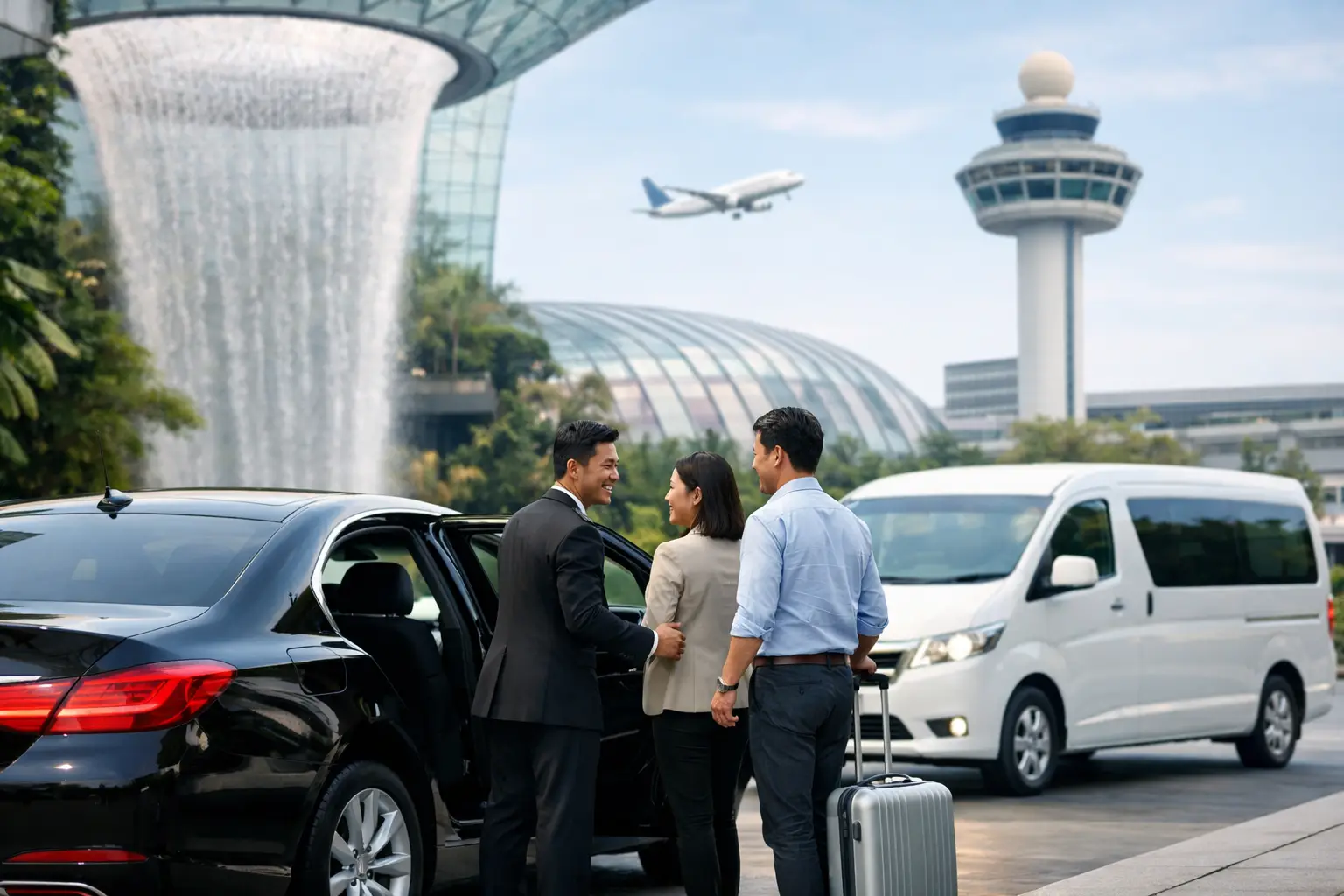
A late-arriving flight, a senior executive on a tight schedule, and four checked bags can turn a routine arrival into a poor first impression. That is why airport transfers Singapore Changi should be planned with the same care as the meeting, event, or hotel program that follows.
At Changi Airport, the transfer itself is rarely just a ride. For individual travelers, it sets the tone for a business trip or family arrival. For corporate teams, it is part of a wider transport operation that needs proper routing, timing control, flight monitoring, and the right vehicle assignment. The right booking depends less on distance and more on passenger profile, baggage, schedule sensitivity, and whether this is a one-off pickup or part of a larger movement plan.
What good airport transfers at Singapore Changi actually look like
A premium airport transfer should feel calm on the surface and tightly managed behind it. The visible part is simple enough - a professional chauffeur, a clean licensed vehicle, punctual arrival, and direct transport to the hotel, office, residence, cruise terminal, or event venue. The less visible part matters just as much.
Flight tracking, dispatch oversight, early vehicle staging, and driver coordination are what separate a dependable airport transfer from a reactive one. Changi is efficient, but arrival timing still shifts. Flights can land early, passengers can clear immigration quickly, and baggage collection can vary by terminal and airline. A service built around live monitoring is better equipped to absorb those changes without turning the customer into the coordinator.
For executive travel, presentation matters as well. A chauffeur handling a board member, investor, speaker, or diplomatic guest is representing more than a transport vendor. The vehicle category, driver conduct, and pickup process all contribute to whether the arrival feels controlled and appropriate.
Airport transfers Singapore Changi for individual and executive travel
For most solo travelers and couples, a sedan is the practical choice when baggage is modest and the itinerary is direct. It suits airport-to-hotel transfers, hotel-to-airport departures, and point-to-point business travel where comfort, privacy, and timely arrival matter more than extra cabin space.
A luxury sedan makes more sense when the passenger profile is senior, client-facing, or VIP. The difference is not just appearance. It is about creating the right standard for investor visits, C-suite arrivals, embassy guests, and hosted business travel where the transfer is part of the hospitality experience.
An MPV is often the better fit when travelers have multiple suitcases, golf bags, shopping luggage, or family requirements. It also works well for small executive groups who want to stay together rather than split across separate vehicles. In many cases, customers initially assume a sedan is enough, then realize the baggage plan says otherwise. Booking up one category is usually cheaper than managing a poor fit at curbside.
This is where experienced dispatching matters. A transfer request is not only about passenger count. Two passengers with six large cases need a different solution from four passengers with carry-ons. A well-run operator asks the right questions early so the assignment matches the actual movement, not just the headcount.
When group airport transfers require more than a simple pickup
Group arrivals at Changi can become complicated quickly. A leadership team landing on one flight is straightforward enough. A conference delegation arriving across multiple flights, terminals, and time bands is a different operation entirely.
Minibuses and coaches are appropriate when keeping a group together is more important than maximizing privacy. They are commonly used for incentive groups, MICE arrivals, cruise transfers, school delegations, sports teams, and staff movements. The value is not only capacity. It is the ability to centralize timing, reduce confusion, and keep the transfer under one coordinated transport plan.
That said, bigger is not always better. A single coach can look efficient on paper, but if the group arrives in separate waves or includes VIP passengers who should not wait for the last traveler, a split-vehicle strategy may be more effective. One premium sedan or MPV for senior guests, combined with a minibus or coach for the wider delegation, often provides a better operational result.
For this reason, airport transfers tied to events or corporate programs should be scoped around the itinerary, not just fleet size. Arrival manifest, flight spread, baggage profile, meeting points, on-site contacts, and venue constraints all affect the correct transport plan.
Choosing the right vehicle for Changi airport transfers
The best vehicle choice usually comes down to four factors: passenger count, baggage, service level, and schedule complexity.
Executive sedans are best for one to three travelers with limited luggage and a straightforward route. They suit airport transfers for business visitors, hotel guests, and professionals who need privacy and efficient movement.
Luxury sedans are better aligned with hosted VIP travel, where the transfer carries a representational role. If the passenger is a key client or senior executive, the premium category is often justified.
Premium MPVs are the most flexible option for airport work. They handle extra baggage well, allow small groups to travel together, and provide a more spacious cabin for families, roadshow teams, or travelers arriving after long-haul flights.
Minibuses and coaches belong in the discussion once the transfer includes larger groups, event logistics, or coordinated corporate movement. They also reduce the administrative burden for organizers who would otherwise manage multiple cars, driver contacts, and arrival updates.
The trade-off is simple. Smaller vehicles provide privacy and flexibility. Larger vehicles improve coordination and cost efficiency at group scale. The right answer depends on what matters more for that specific move.
What corporate buyers should look for in airport transfers Singapore Changi
For operations managers, office administrators, and event planners, airport transport is rarely judged on the ride alone. It is judged on whether the transfer ran according to plan without requiring constant intervention.
That means the provider should have a clear dispatch process, not just available vehicles. Senior dispatcher review, flight monitoring, routing control, chauffeur briefing, and contingency handling all matter when passenger movements are business-critical. This is especially true when the transfer connects to board meetings, media schedules, exhibitions, or time-sensitive site visits.
Commercial insurance and licensed vehicles are basic requirements, not premium extras. Chauffeur standards matter too. Drivers assigned to executive and diplomatic service should understand discretion, punctuality, and how to handle high-visibility passengers without making the experience feel theatrical or intrusive.
For larger programs, buyers should also consider how the transfer provider handles changes. Flight delays, additional passengers, venue timing shifts, and revised manifests are common. The real test is whether those adjustments can be absorbed through active coordination rather than pushing the problem back to the customer.
This is why many organizations prefer a transport partner that can handle both single VIP arrivals and larger fleet programs. It reduces fragmentation and gives the organizer one operational point of control.
Booking fixed-rate transfers versus quoted transport plans
Not every Changi transfer needs the same booking method. A standard airport-to-city transfer for one traveler or a family can usually be handled as a fixed-rate booking, provided the route and vehicle need are clear.
A quoted plan is usually better when the requirement includes multiple pickups, large groups, waiting time, standby service, event shuttles, or a mix of vehicle categories. That includes conference arrivals, hosted roadshows, staff airport runs, and delegations where timing and fleet coordination are part of the service itself.
The distinction matters because these are two different transport jobs. One is a defined transfer. The other is a managed movement program. Treating them the same often leads to under-scoped bookings, mismatched vehicles, or timing gaps on arrival day.
For customers who need both premium presentation and operational discipline, this is where a specialist provider such as Limo Z tends to stand apart. The value is not simply in the fleet range. It is in the ability to pair chauffeur service standards with dispatch control and scalable transport planning.
Common mistakes to avoid when arranging a Changi transfer
The most common error is booking by passenger count alone and ignoring luggage. The second is assuming all airport pickups are operationally identical. They are not.
An executive arriving for a board meeting, a family of five with strollers, and a 40-person incentive group all require different planning logic. Another mistake is underestimating terminal timing. Even at a highly efficient airport, arrival flows can change enough to affect pickup execution.
It is also worth being realistic about service level. If the arrival is high-stakes, this is not the place to optimize around the lowest possible rate. Reliability, presentation, and real-time coordination usually matter more than minor savings, particularly when the passenger is a client, executive, or hosted guest.
The best airport transfer plan is the one that fits the real journey. If the trip is simple, keep it simple with the right vehicle and proper flight tracking. If the movement is larger, build it as an operation from the start. Changi runs well, but the outcome still depends on how well the ground side is managed.