
Best Vehicles for Executive Roadshows in Singapore
21 November 2026
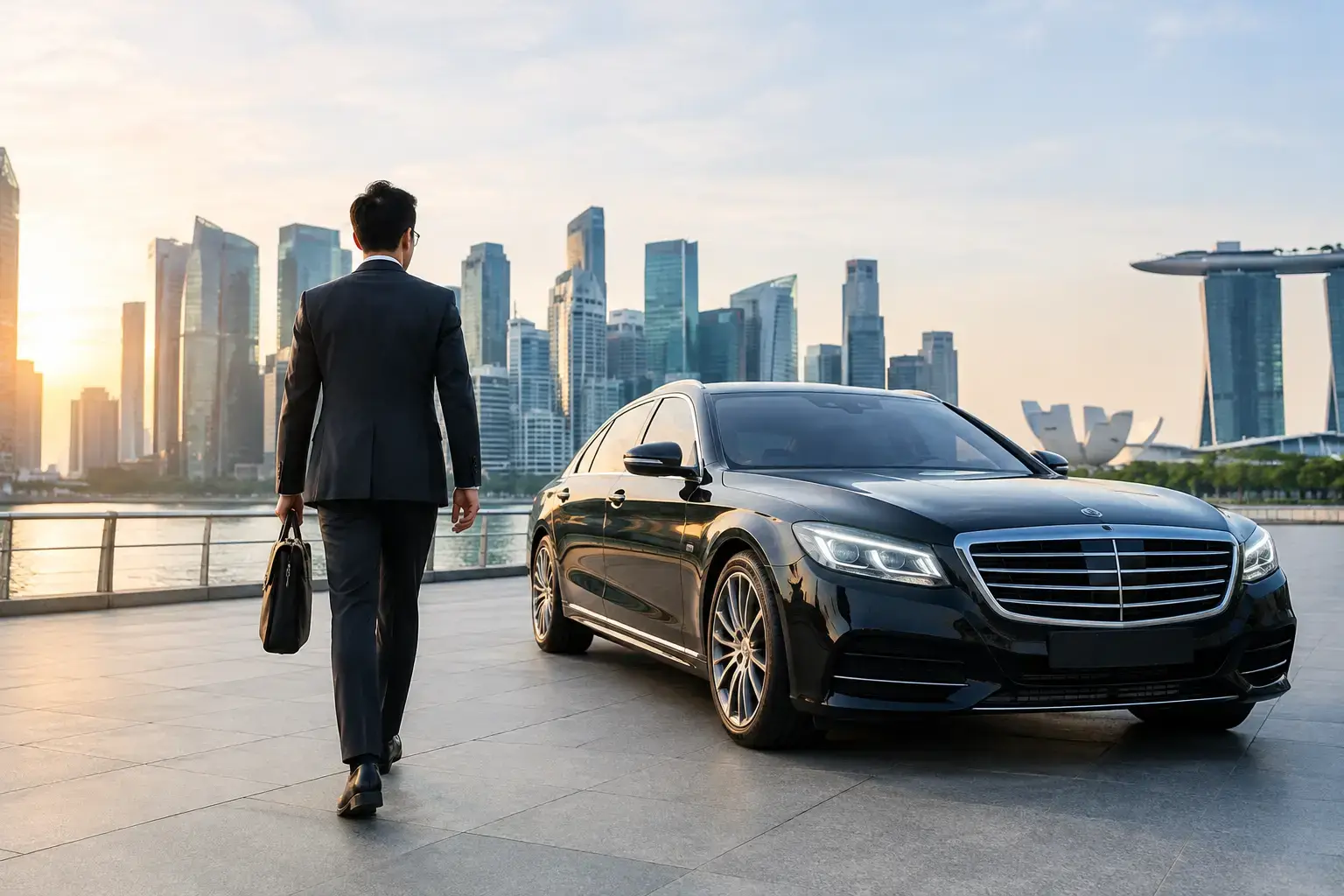
An executive roadshow can lose momentum before the first meeting starts. A delayed pickup at Changi, a vehicle too small for presentation cases, or an unplanned split between senior leaders and their hosts creates friction that guests notice. Selecting the best vehicles for executive roadshows is therefore less about choosing the most expensive car and more about matching fleet capacity, passenger hierarchy, route conditions, and timing to the program.
For Singapore roadshows, that decision is particularly operational. Meetings may move from the airport to Marina Bay, Raffles Place, One-North, Sentosa, or industrial sites in a single day. Traffic, hotel access rules, loading zones, security procedures, and luggage all affect the right vehicle plan.
Best Vehicles for Executive Roadshows: Start With the Itinerary
The vehicle should be chosen after the itinerary is mapped, not before. A two-person investor visit across the CBD has different requirements from a regional leadership team attending three site inspections, even if both programs are described as executive travel.
Begin by confirming the number of travelers, the number of separate pickup points, flight arrivals, luggage volume, meeting locations, and the order of seniority within the group. Then identify whether passengers must travel together for briefing purposes or whether separate vehicles are more appropriate for privacy and flexibility.
A practical roadshow plan also allows for real operating time, not only driving time. Executive guests may need ten minutes to exit a hotel, clear a venue security desk, or collect materials before departure. A schedule that appears efficient on paper can become fragile if every transfer is timed to the minute.
For high-visibility programs, a transport coordinator should work from a master movement sheet that includes guest names, mobile contacts, flight details, vehicle assignments, planned arrival times, and venue instructions. This gives dispatch a clear reference point when a meeting overruns or an inbound flight changes.
Executive Sedans for One to Three VIP Travelers
Executive sedans are usually the strongest choice for individual VIPs, C-suite leaders, diplomats, and visiting clients traveling with a host. They provide a discreet arrival experience and are well suited to airport transfers, hotel departures, dinner engagements, and back-to-back meetings in the central business district.
The advantage is not simply appearance. A sedan can access most hotel porte-cocheres, office drop-off points, and private entrances with minimal disruption. It is also easier to stage close to a venue when timing is tight.
However, sedans are not always the best answer for a roadshow. Once a traveler has large checked luggage, presentation boards, product samples, or multiple assistants, space becomes constrained quickly. A sedan is ideal when the passenger count is low and the movement is truly executive in nature. It becomes less suitable when the itinerary carries equipment or needs space for work between appointments.
For senior leadership groups, assigning one executive sedan per principal can also be appropriate. This creates privacy and protects individual schedules if meetings finish at different times. The trade-off is higher coordination demand, since every vehicle must receive consistent routing and venue instructions.
Luxury Sedans for Client-Facing Arrivals
Where presentation matters most, luxury sedans provide an elevated option for VIP airport arrivals, board-level meetings, and hosted investor visits. They are especially effective when a company wants the arrival experience to reflect the importance of the guest.
Use them selectively. Placing every participant in a luxury sedan may not add meaningful value to a larger delegation, while using them for principals and executive hosts can establish the right standard without overcomplicating the fleet plan.
Premium MPVs for Small Teams and Airport Movements
Premium MPVs are often the most versatile vehicles for executive roadshows. They suit small groups who need to stay together, including four to six passengers depending on luggage requirements and vehicle configuration. They also work well for an executive traveling with colleagues, security personnel, or a local host.
The additional cabin and luggage space makes an MPV useful for airport arrivals, multi-stop site visits, and all-day chauffeur bookings. Guests can bring carry-ons, laptop bags, event materials, and light equipment without turning the transfer into a cramped experience.
An MPV is often the better operational choice when a team needs to review talking points between meetings. Keeping the group together reduces missed instructions and avoids the need to synchronize several sedans at every stop. For a sales leadership roadshow, investor relations program, or corporate site tour, that continuity can matter more than the formal look of a sedan.
The limitation is hierarchy. If one passenger is a principal and the others are support staff, a separate sedan or luxury sedan may offer a more suitable executive experience. The best plan may be a sedan for the principal and an MPV following with the wider team and materials.
Minibuses and Mini Coaches for Delegations
Once a roadshow involves a delegation, a minibus or mini coach is usually more efficient than arranging multiple MPVs. These vehicles are appropriate for larger management groups, visiting teams, conference speakers, and client delegations moving between a hotel, office, meeting venue, and hosted dinner.
The core advantage is control. One vehicle assignment makes it easier to confirm attendance, share timing updates, and keep the group on the same schedule. It also reduces the risk of split arrivals caused by different vehicle routes, venue entrances, or traffic conditions.
Minibuses are a strong choice for shorter city movements and medium-sized groups. Mini coaches provide more room when the program includes airport luggage, longer travel periods, or a larger number of guests. The correct option depends on passenger count, baggage, and whether the group needs space for equipment or an on-board coordinator.
Before confirming either vehicle, check venue access. Some hotels, office towers, and private facilities have limits on vehicle height, driveway clearance, or waiting areas. A vehicle that is perfect for passenger capacity may be impractical if it cannot safely reach the designated pickup point.
Full-Size Coaches for Large Corporate Roadshows
A full-size coach is designed for structured group movement rather than intimate executive travel. It is the right vehicle when a company is moving a large delegation, attendees from a conference hotel, multiple teams to a business park, or guests between event venues on a fixed schedule.
For roadshows with 30 or more participants, a coach can bring order to an otherwise fragmented program. It simplifies headcounts, supports a common departure time, and gives organizers one clear arrival window to manage at each venue. It is particularly useful for MICE programs, factory or campus tours, and leadership off-sites where the group must remain together.
The trade-off is flexibility. Coaches require more planning around loading points, parking, passenger boarding time, and route access. They should not be treated as oversized cars. A coach movement needs confirmed pickup bays, realistic boarding allowances, and a venue contact who understands where the vehicle will arrive.
Build the Fleet Around Roles, Not Just Headcount
The most effective executive roadshow fleets rarely use only one vehicle type. They reflect the different roles within the group. A principal may require a private luxury sedan, while the executive team uses a premium MPV and support staff or event guests travel by minibus.
This approach protects the guest experience without wasting capacity. It also gives the organizer options when schedules diverge. If the principal leaves an extended board meeting early, their chauffeur can depart while the wider team continues to the next appointment on the planned schedule.
For complex programs, consider these four questions before assigning vehicles:
- Which travelers need privacy, discretion, or separate arrival timing?
- Which people must remain together for briefings, interpretation, or client hosting?
- How much luggage, event material, or equipment will move with each group?
- Can every assigned vehicle safely access each hotel, office, and venue stop?
Those answers usually identify the right fleet faster than selecting a vehicle solely by passenger count.
Dispatch Standards Matter as Much as Vehicle Choice
A premium vehicle cannot compensate for weak coordination. Roadshows need active dispatch oversight, confirmed chauffeur instructions, early arrival standards, and live monitoring of airport flights and route conditions. The chauffeur should know the passenger name, pickup procedure, destination entrance, timing priority, and whether the next stop is fixed or subject to change.
For a multi-vehicle program, every chauffeur should work from the same current itinerary. Changes should be communicated through a controlled dispatch channel rather than passed informally from one guest to another. This is particularly important when a roadshow includes overseas visitors who may not be familiar with Singapore venues or local traffic patterns.
Limo Z plans executive roadshow movements with this operational discipline in mind, from individual VIP transfers to coordinated coach programs. Licensed and commercially insured vehicles, experienced chauffeurs, and senior dispatch review create a more dependable structure when the itinerary cannot afford improvisation.
The right roadshow vehicle is the one that lets each passenger arrive prepared, on time, and without having to think about transportation at all. Plan the fleet around the actual movement of people, luggage, access points, and decisions, and the roadshow will feel controlled from the first arrival to the final departure.