
City Transfer Service Singapore Explained
5 July 2026
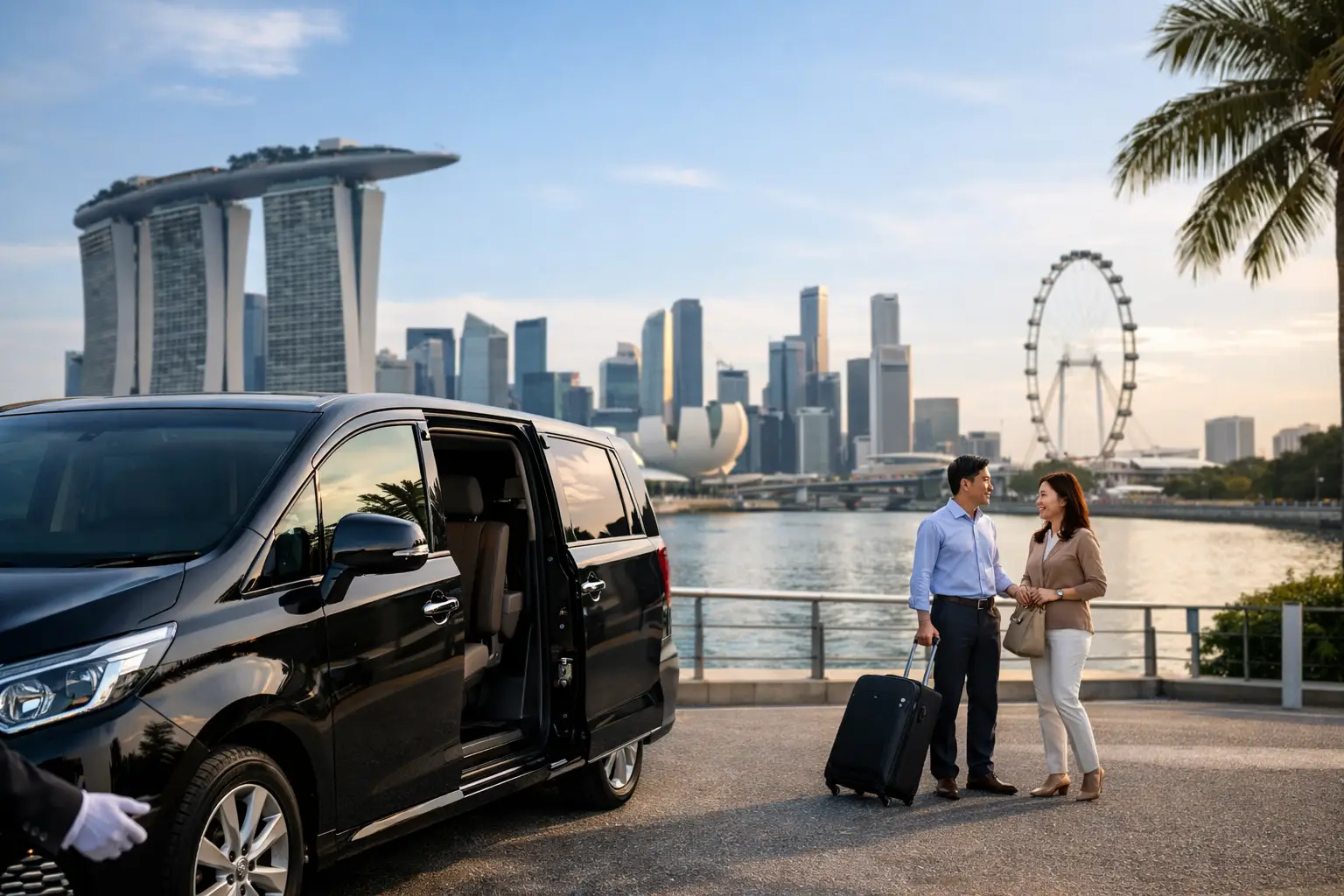
Landing in Singapore with 20 minutes between a hotel check-in, a boardroom arrival, and a client dinner is when transport stops being a convenience and becomes a risk point. A city transfer service Singapore booking is built for exactly that kind of movement - direct, scheduled, and managed with more discipline than a standard point-to-point ride.
For some travelers, that means a polished airport-to-Marina Bay arrival with a chauffeur who is already on-site, route checked, and ready. For others, it means moving a delegation from one convention venue to several hotels without losing timing, visibility, or presentation. The term sounds simple, but the service can cover very different operational needs depending on who is traveling and what is at stake.
What a city transfer service in Singapore actually covers
At its core, a city transfer service in Singapore is pre-arranged ground transportation between two locations within the city or greater metro area. That may include hotel transfers, office transfers, event transfers, cruise terminal pickups, restaurant runs, inter-meeting movements, or airport-to-city travel that continues as part of a broader itinerary.
What separates it from booking an ordinary ride is the service structure behind it. A professionally run transfer is scheduled in advance, assigned to a suitable vehicle category, reviewed for routing, and handled by a chauffeur operating under commercial standards. When the trip matters, those details are not cosmetic. They affect punctuality, guest experience, and how much margin you have when traffic, flight changes, or venue restrictions enter the picture.
For executive travelers, the value is usually consistency and discretion. For corporate and event buyers, the value is control. You are not only buying a car from A to B. You are buying a movement that has been planned.
When a city transfer service Singapore makes sense
Not every journey requires chauffeur service. If timing is flexible and the trip carries no commercial or hospitality implications, a regular ride option may be enough. But there are situations where the trade-off changes quickly.
Business travel is the most obvious one. If a senior executive is arriving from an overnight flight and heading directly to a meeting, the transfer needs to be punctual, quiet, and professionally presented. The same applies when hosting overseas clients. The car is part of the first impression, and missed timing is remembered longer than most people expect.
The second case is hospitality-led travel. VIP visitors, family office clients, diplomatic guests, and wedding principals often need privacy, waiting tolerance, and a chauffeur who understands formal service standards. In these settings, the cheapest transport option is rarely the right one.
The third case is operational complexity. A city transfer may sound straightforward until it involves multiple passengers, staggered arrival times, luggage, venue access rules, or a sequence of stops. Once there are several moving parts, managed transport becomes less about luxury and more about avoiding avoidable failures.
Vehicle choice changes the outcome
One of the most common booking mistakes is choosing based on price before considering passenger profile, luggage, and use case. The right vehicle is not only about seat count.
Executive sedans are usually the best fit for solo travelers, couples, and business passengers who want a quiet, efficient transfer with a polished appearance. Luxury sedans add a stronger hospitality element and suit VIP hosting, board-level travel, and guests where presentation matters as much as punctuality.
Premium MPVs are often the practical choice for small groups, travelers with more baggage, or executives who prefer easier entry, more cabin space, and extra flexibility. In Singapore, this category is especially useful for airport-city transfers and family or delegation movements where comfort and luggage capacity need to coexist.
For group transport, minibuses and coaches become the more responsible option. This is where many buyers underestimate the planning involved. Group movement is not simply a larger car booking. Loading times, dispatch timing, holding areas, access limitations, and backup planning all matter. A provider with the right fleet range can match the trip properly instead of forcing every movement into one vehicle type.
What corporate buyers should look for
If you are booking on behalf of a company, transport quality is only one part of the decision. The other part is whether the provider operates with enough structure to support real business requirements.
Dispatch oversight matters. A transfer company should not rely entirely on automated assignment with no senior review, especially for executive or time-sensitive bookings. Route planning matters too, because Singapore traffic can shift quickly around peak periods, event zones, and commercial districts.
Insurance and licensing should be treated as baseline requirements, not premium extras. The same goes for chauffeur standards. A professionally trained chauffeur is expected to do more than drive. They should understand punctual arrival, guest handling, discretion, and venue etiquette.
For recurring corporate needs, scalability is another dividing line. A provider may be excellent at one-off airport runs but struggle with conference transport, employee shuttle programs, or multi-day delegation schedules. If your requirements can expand from one executive transfer to 80 passengers across several venues, you need a transport partner built for both ends of that range.
City transfers for events and delegations
This is where the gap between basic ride supply and managed transport becomes very clear. An event transfer program needs timing discipline before the first passenger boards.
Consider a conference with airport arrivals, hotel check-ins, VIP escorts, sponsor dinners, and venue returns. Each movement may involve different passenger groups, service tiers, and vehicle classes. If all of that is booked piecemeal, visibility disappears fast. If one arrival is delayed or one route is misjudged, the effect can spread across the schedule.
A well-run city transfer service Singapore program for events should account for manifest management, allocation by guest type, staging times, route coordination, and on-the-day communication. For organizers, that means fewer reactive decisions. For guests, it simply feels organized.
There is also a presentation issue here. Event transport is part of the event itself. When sponsors, speakers, or VIP delegates are being moved, the vehicle standard and chauffeur conduct reflect directly on the host organization.
Booking methods are not all the same
For individual travelers and straightforward executive trips, fixed-rate online booking is usually the right approach. It is fast, clear, and suitable for standard airport transfers, city transfers, and hourly chauffeur requests where the itinerary is defined.
But once the requirement includes multiple vehicles, custom schedules, recurring staff transport, or large-group coordination, quotation-based planning is the better fit. It allows for routing review, capacity planning, and service design based on the actual movement rather than a generic booking form.
This distinction matters because transport needs can look similar on the surface while being completely different operationally. A hotel-to-office transfer for one executive should be easy to confirm. A three-day MICE schedule across venues and hotels should be scoped, reviewed, and managed accordingly. Serious providers treat those jobs differently because they are different.
The trade-off between cost and control
Every buyer has a budget. The real question is what level of transport risk the budget can tolerate.
A lower-cost option may work for casual travel, but it often comes with less certainty on vehicle type, waiting standards, chauffeur consistency, and service recovery. That may be acceptable for some trips. It is usually not acceptable for airport pickups tied to board meetings, investor visits, wedding movements, or event programs.
Premium transfer service costs more because more is being managed behind the scenes - dispatch review, flight tracking, early arrival standards, commercial compliance, and vehicle suitability. Those are easy to dismiss until something changes on the day. Then they become the difference between a controlled adjustment and a visible failure.
For travelers and operations teams that value reliability, that premium is not about excess. It is about reducing uncertainty.
Choosing the right provider for city transfer service Singapore
The best provider is rarely the one making the broadest promises. It is the one that can clearly explain how bookings are handled, what fleet options are available, when a trip should be quoted manually, and what controls are in place if timings shift.
Look for specificity. Ask how airport arrivals are monitored, how chauffeurs are briefed, how group transfers are coordinated, and what vehicle classes are available for different passenger counts. If the answers are vague, the operation may be too.
For buyers who need both executive presentation and operational discipline, companies such as Limo Z are positioned around that balance. The value is not only in the vehicle itself. It is in the structure behind the service.
The right city transfer should feel calm because the planning was not casual. That is usually the clearest sign you booked well.