
Conference Shuttle Service Singapore Guide
8 July 2026
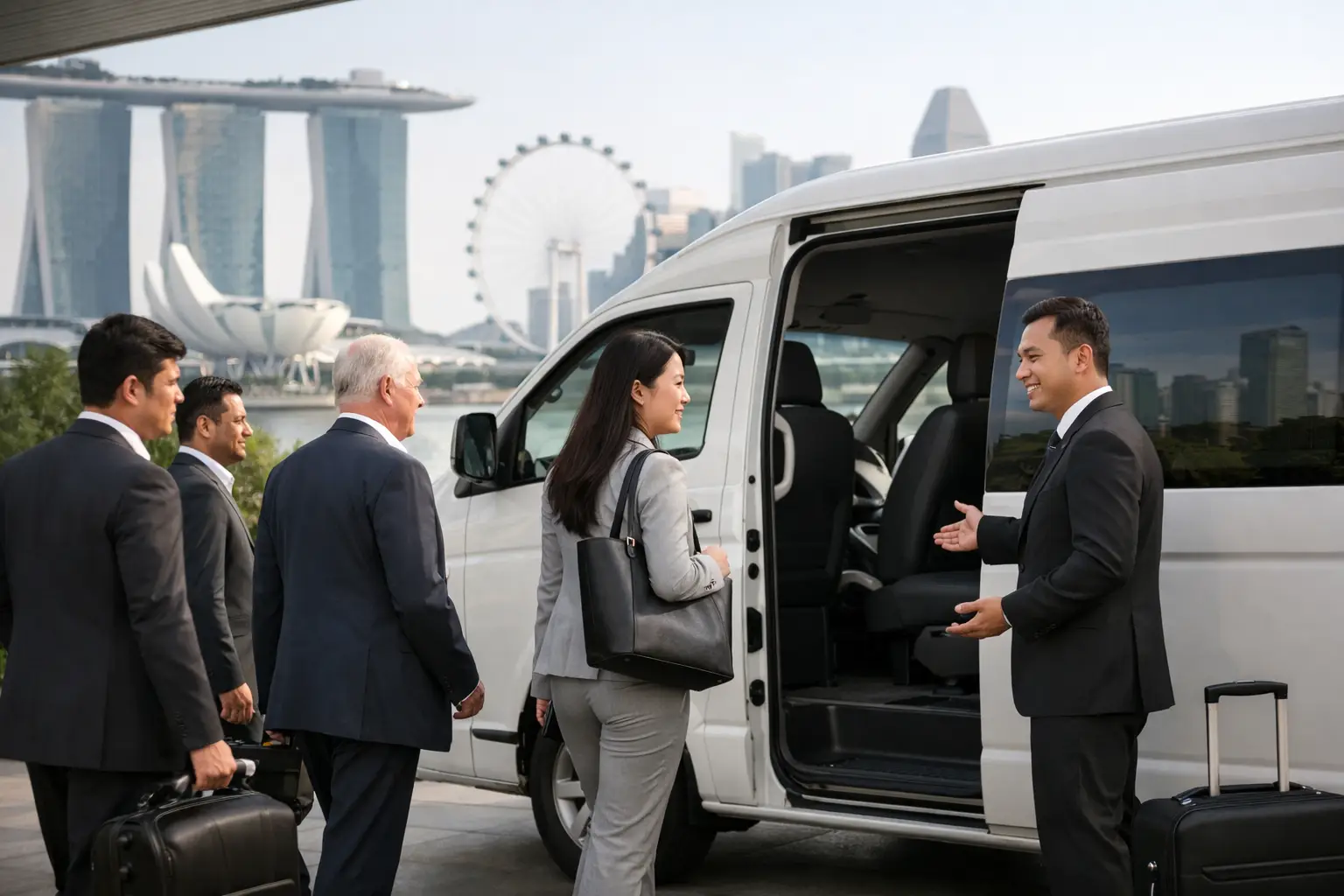
A conference agenda can be perfectly timed on paper and still fail at the curb. Delegates land late, VIP speakers arrive on different flights, hotel exits get congested, and one missed transfer can ripple into registration delays, late panel starts, and a poor first impression. That is why conference shuttle service Singapore is less about moving people from point A to point B and more about managing timing, presentation, and operational control across the full event schedule.
For conference organizers, corporate administrators, and MICE teams, transport is rarely a standalone item. It touches guest experience, venue flow, staffing, budget, and risk management at the same time. A well-run shuttle plan supports everything else. A weak one creates friction that no branding, signage, or hospitality desk can fully hide.
What conference shuttle service in Singapore actually needs to cover
In practice, conference transport is usually a mix of different movement types rather than one simple shuttle loop. You may need airport pickups for executives and international speakers, scheduled hotel-to-venue transfers for delegates, inter-venue moves for breakout sessions, evening transfers for dinners, and standby vehicles for late changes. Treating all of that as one generic shuttle service is where planning often starts to slip.
Singapore is efficient, but conference schedules still face pressure points. Flight banks create clustered arrivals. Central business districts and convention areas have loading restrictions and peak-hour congestion. Larger events may split guests across multiple hotels, each with different pickup conditions and waiting areas. The transport plan needs to account for those details early, not after registration numbers are finalized.
The most reliable approach is to build transport around actual attendee groups. VIPs usually need private executive transfers with tighter service standards and more discretion. General delegates may be best served by shared minibuses or coaches on fixed departure windows. Staff, exhibitors, and technical teams often require earlier and later movements than the main attendee group. These are different service layers, and they should be planned that way.
How to scope a conference shuttle service Singapore plan
A useful transport brief starts with the event schedule, not the vehicle list. Before choosing sedans, MPVs, minibuses, or coaches, define who is traveling, from where, at what time, and under what service expectations. That sounds basic, but many shuttle plans fail because the fleet decision comes before the routing logic.
The first question is volume. A conference with 40 senior delegates housed in one hotel requires a very different plan from a 700-person regional event spread across Marina Bay, Orchard, and the airport district. The second question is profile. If the attendee mix includes board members, diplomats, C-suite speakers, or hosted buyers, private transfers may need to run alongside larger shuttle loops.
Then comes schedule design. Fixed departures work well when registration windows are broad and attendee behavior is predictable. Rolling service with dispatch coordination works better when arrivals are staggered or the event includes multiple entry points. Neither model is automatically better. It depends on the event format, venue access, and how much waiting your guests will tolerate.
A serious provider will also ask for dwell times, loading bay rules, baggage assumptions, and fallback scenarios. For example, airport arrivals with exhibition materials or conference kits may require larger vehicles than passenger counts alone suggest. A venue with strict coach access hours may need off-site staging and tighter dispatch timing. Those details shape whether the operation runs calmly or turns reactive.
Fleet strategy matters more than many planners expect
The right fleet mix is one of the clearest indicators of whether a provider understands event transport or is simply assigning vehicles. A conference rarely needs one vehicle type only. It usually benefits from matching each transport task to the right class of vehicle.
Executive sedans and luxury sedans suit keynote speakers, senior management, and hosted VIP arrivals where timing, presentation, and privacy matter. Premium MPVs are useful for small groups, airport transfers with luggage, and multi-stop executive itineraries. Minibuses and mini coaches often cover hotel shuttles efficiently when attendee volume is moderate and pickup points are limited. Full-size coaches are usually the most cost-efficient option for large delegate flows, but only if venue access and loading capacity support them.
There is also a trade-off between visual consistency and operational flexibility. A single vehicle category can simplify staging and signage, but mixed fleets often produce better economics and smoother routing. For example, sending a full-size coach to collect a handful of speakers from a premium hotel may be operationally awkward and out of step with the guest experience. On the other hand, overusing private vehicles can inflate cost and make dispatch harder to control during peak windows.
The right answer is usually a layered fleet plan, with premium vehicles reserved for the guests who need them and higher-capacity vehicles assigned where grouping improves efficiency.
Dispatch control is the difference between transport and logistics
Conference transport should not depend on drivers improvising on the day. It needs central oversight. Dispatch review, route confirmation, driver briefing, and schedule updates are what separate a managed conference operation from a basic transfer booking.
This becomes especially important when flights shift, sessions overrun, or one hotel pickup falls behind. Without active dispatch support, every small disruption lands back on the event team. That increases radio traffic, drains staff attention, and creates avoidable confusion at the curb.
Strong conference shuttle service Singapore operations usually include pre-assigned pickup sequencing, clear chauffeur instructions, monitored arrival timing, and communication protocols for changes. If airport transfers are part of the scope, flight tracking should be standard rather than optional. If VIPs are involved, early-arrival standards and discreet meet-and-greet handling matter just as much as the vehicle class itself.
For large events, it is also worth considering an on-site transport coordinator or a tightly briefed remote dispatch team with direct access to the event lead. That single point of control can prevent fragmented decisions when the schedule starts to move.
Common mistakes event teams make
One frequent mistake is underestimating transition time. Organizers often calculate drive time accurately but leave too little margin for hotel boarding, badge checks, loading, or venue security. In conference transport, curbside time is often more variable than road time.
Another issue is planning around ideal attendance rather than actual behavior. Even when delegates receive fixed shuttle times, some arrive early, some arrive late, and some change plans without notice. If the shuttle design has no tolerance for that variability, the pressure falls on the first departure wave and compounds from there.
There is also a tendency to treat airport transfers and conference shuttles as separate contracts with no operational overlap. That can work for small events, but for larger programs it creates handoff risk. Guests do not care which vendor handles which segment. They only notice whether the movement feels controlled and consistent.
Finally, some buyers select transport based on rate alone, then discover too late that event coordination, dispatcher oversight, insurance standards, and experienced chauffeurs were never really part of the service model. For a private dinner transfer, that may be manageable. For a conference with hosted guests and a fixed plenary start, it is a costly gamble.
When to book and what to prepare
The earlier you define transport requirements, the more practical your options will be. Premium vehicles, minibuses, and coaches can all become constrained around major exhibition dates, international summits, and seasonal corporate travel peaks in Singapore. Waiting until the final delegate count is confirmed often narrows your best choices.
At quotation stage, the most helpful information includes event dates, venue names, hotel list, estimated passenger counts by movement type, VIP requirements, luggage assumptions, and a draft agenda with timing windows. If there are security protocols, branding requests, or restricted access points, mention those up front. They affect routing and staffing.
For more complex programs, it is sensible to ask how the provider handles dispatcher review, chauffeur briefing, insurance, contingency vehicles, and real-time changes. Those questions reveal whether you are buying transport capacity only or an actual event mobility structure.
Providers with both premium chauffeur capability and scalable group transport are usually better positioned for conference work because they can manage executive hospitality and delegate movement under one operating framework. That is particularly useful when a conference includes airport arrivals, board-level hosting, and high-volume hotel shuttles in the same program. In that environment, a company like Limo Z is not only supplying vehicles but coordinating movement standards across the full event journey.
The standard attendees remember
Most delegates will not compliment the shuttle plan directly. They will simply notice that the day starts on time, the arrival experience feels organized, and senior guests are handled properly. That quiet success is the point.
A conference shuttle service should protect the schedule, support the brand, and reduce pressure on your event team. If the plan is built around real movement patterns, matched to the right fleet, and backed by disciplined dispatch control, transport stops being a risk item and starts doing what it should have done from the beginning - making the entire event feel well run.