
Diplomatic Chauffeur Protocol Guide for Singapore
13 August 2026
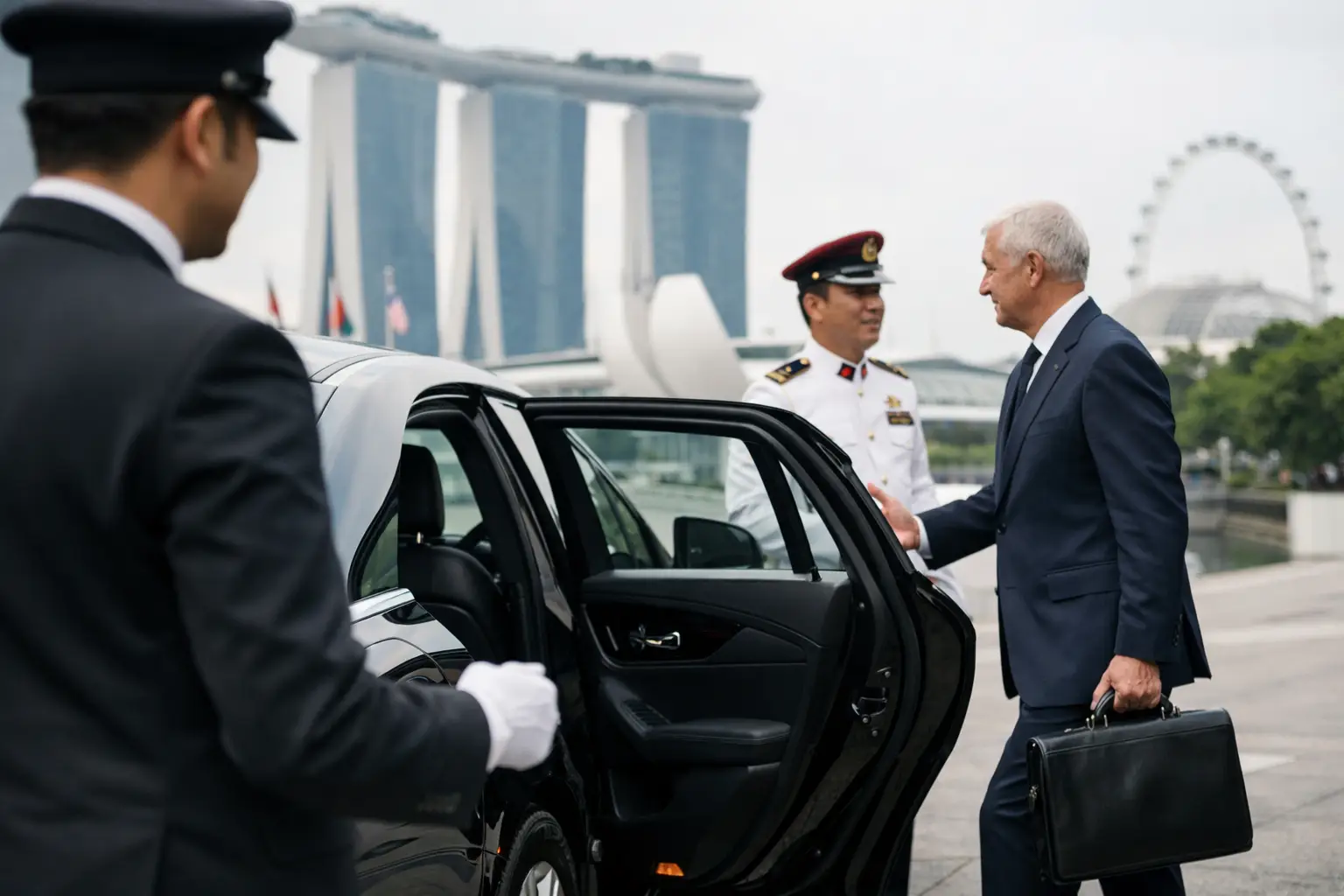
A diplomatic movement can be affected by a single missed detail: an airport meeting point that is too public, a vehicle positioned on the wrong side of a secure entrance, or a driver calling the principal when the protocol office expects to manage contact. This diplomatic chauffeur protocol guide sets out the operational standards that help protect timing, privacy, and presentation for official visitors in Singapore.
Diplomatic chauffeur service is not simply executive travel with a luxury vehicle. It is a managed movement program built around confirmed instructions, controlled communication, route awareness, and the ability to adjust without drawing attention to the adjustment. The appropriate level of protocol depends on the delegation, the venue, security requirements, and the principal's schedule. A ministerial arrival, embassy transfer, corporate delegation, and visiting head of mission may all require different handling.
Start Diplomatic Chauffeur Protocol Before Arrival
The movement should be planned before the vehicle is dispatched. The transport coordinator needs a single confirmed itinerary, not a collection of informal messages from multiple stakeholders. This should identify the principal or delegation, passenger count, luggage profile, flight details, approved contacts, pickup sequence, vehicle allocation, and each scheduled destination.
For airport arrivals, flight monitoring is useful, but it does not replace a live handover plan. A delayed flight may change terminal congestion, chauffeur staging time, or the preferred collection point. The chauffeur should know whether the guest is being met landside, escorted by a protocol officer, or instructed to proceed to a designated arrival area. The coordinator should also confirm which contact has authority to approve an operational change.
This matters because diplomatic travel frequently runs on tight windows. A guest may have only 20 minutes between arrival at a hotel and departure for a bilateral meeting. In that scenario, the dispatcher is not merely tracking a car. They are managing readiness across chauffeur, vehicle, route, backup coverage, and venue access.
Establish a Clear Chain of Communication
The principal should not be asked to solve routine transport questions. Chauffeurs should normally communicate through the named protocol officer, executive assistant, security detail lead, or event transportation manager. Direct contact with the passenger may be appropriate only when expressly requested, such as an airport pickup for a senior executive traveling without an escort.
A disciplined communication plan covers more than phone numbers. It defines what the chauffeur may confirm, who receives delay updates, and how urgent changes are escalated. For example, a chauffeur can report that the vehicle is in position, but a route diversion caused by a road closure should be reported to dispatch and the designated coordinator at the same time.
Discretion is equally practical. Passenger names, hotel details, meeting locations, and movement times should be shared only with personnel who need them to perform the assignment. Chauffeurs should avoid discussing travelers, destinations, or schedules with venue staff, other drivers, or unrelated passengers.
Vehicle Standards and Chauffeur Presentation
The right vehicle is determined by the itinerary, not by prestige alone. A luxury sedan can be suitable for one principal with light luggage. A premium MPV may be better for an official traveling with aides, documents, or close-protection personnel. For a full delegation, minibuses, mini coaches, or full-size coaches may be required, supported by a lead coordinator and timed vehicle release plan.
Every vehicle should arrive clean, fueled or fully charged as applicable, climate-controlled, and checked for passenger comfort. Bottled water, umbrellas, charging access, and luggage capacity should be considered in advance, but only where they fit the client brief. Some delegations prefer a minimal cabin setup, while others expect executive amenities. Assumptions can create inconvenience.
Chauffeur presentation should be formal, understated, and consistent with the assignment. The expectation is polished business attire, calm conduct, and no unnecessary conversation. A professional chauffeur reads the environment: greeting a guest respectfully, assisting with doors and luggage when appropriate, then allowing quiet once the passenger is settled.
The chauffeur is not a security officer, diplomatic aide, or tour guide unless that role has been separately arranged. This boundary is essential. The chauffeur's responsibility is to operate the vehicle safely, follow approved movement instructions, maintain discretion, and escalate concerns through the agreed chain of command.
Airport and Venue Handling Require Precision
Singapore airport transfers often involve changing flight arrival times, terminal considerations, baggage delays, and high foot traffic. The chauffeur should be staged early enough to absorb normal variation while avoiding unnecessary circulation. The exact waiting method should be set in the job brief, including whether a name board is appropriate or whether the guest will be identified through a protocol escort.
For high-profile arrivals, an openly displayed name sign may not be desirable. A discreet identifier, chauffeur description, vehicle details, or direct handover through a coordinator can be more suitable. The correct method depends on the client's privacy needs and airport operating conditions.
At hotels, government buildings, conference venues, and private residences, access instructions should be verified before departure. Some properties have dedicated loading areas, restricted driveways, security screening points, or strict vehicle dwell-time rules. The chauffeur should know where to stop, where to wait after drop-off, and who will authorize re-entry.
A practical pre-movement check should confirm the following:
- Principal and delegation passenger count, including aides and security personnel
- Vehicle type, luggage capacity, and any required backup vehicle
- Approved pickup point, destination entrance, and driver holding location
- Named operational contact and escalation number
- Flight status, route conditions, timing buffer, and next movement requirement
These details are simple, but they prevent the most common service failures: an undersized vehicle, an unapproved pickup area, a chauffeur waiting at the wrong entrance, or a coordinator unable to locate the assigned car.
Routing Is About Reliability, Not Just Speed
The fastest route is not always the best route for diplomatic travel. A suitable route considers scheduled arrival time, road restrictions, expected congestion, passenger comfort, weather, venue access, and the consequences of an unexpected delay. For some movements, the preferred route may be chosen for consistency and ease of coordination rather than the shortest travel time.
Chauffeurs should review the route before the assignment and stay responsive to real-time conditions. If an accident, heavy rain, road closure, or event-related congestion affects the plan, dispatch should be prepared to recommend an alternative. The goal is a controlled adjustment, not a last-minute decision made without visibility.
Timing buffers must be realistic. Building in time for airport immigration, luggage collection, security clearance, vehicle access, and venue drop-off protects the schedule without forcing the passenger to wait excessively. It depends on the assignment: a private executive transfer may need a modest buffer, while a multi-vehicle delegation movement may require more substantial staging and release intervals.
Managing Delegations and Multi-Vehicle Movements
A diplomatic delegation becomes more complex when passenger groups must move together but not necessarily in the same vehicle. Principals, aides, interpreters, media personnel, and support staff may have different destinations, security requirements, and departure times. Treating all passengers as one group can create unnecessary delays.
A transportation plan should separate the movement into vehicle groups, each with a clear manifest and route. The lead coordinator needs visibility over every chauffeur, vehicle location, pickup status, and contingency option. Larger programs may also require a standby sedan or MPV for schedule changes, luggage overflow, or an unplanned executive movement.
For conferences, state visits, and MICE programs, vehicle dispatch should be built around timed waves. Guests should not all be released from a venue at once if the road frontage cannot accommodate the fleet. A staged departure plan reduces congestion, preserves presentation, and keeps senior passengers from waiting behind general attendees.
Limo Z applies this operational approach across individual VIP transfers and larger delegation programs, combining trained chauffeurs with dispatch review, appropriate fleet allocation, and coordinated movement planning.
Prepare for Disruption Without Creating Drama
The strongest protocol plans include contingencies that passengers never see. A backup chauffeur, alternate vehicle, revised airport collection point, or secondary route should be considered where the schedule is high stakes. The appropriate level of backup depends on the importance of the movement and the cost of disruption.
If a change occurs, the response should be factual and brief. Confirm the issue, state the operational solution, provide the revised timing where known, and notify only the relevant parties. There is no benefit in exposing the principal to internal dispatch detail or speculative updates.
The same principle applies to delays caused by the guest's schedule. Chauffeurs should remain patient and available, while dispatch updates the next pickup, vehicle rotation, or waiting plan. A service that appears calm to the passenger is usually supported by disciplined coordination behind the scenes.
For diplomatic travel, the best chauffeur service is often the least visible part of the day. When the vehicle is ready, the route is anticipated, the communication is controlled, and the arrival feels unforced, the principal can focus on the purpose of the visit rather than the mechanics of getting there.