
How Much Is Airport Taxi in Singapore?
30 June 2026
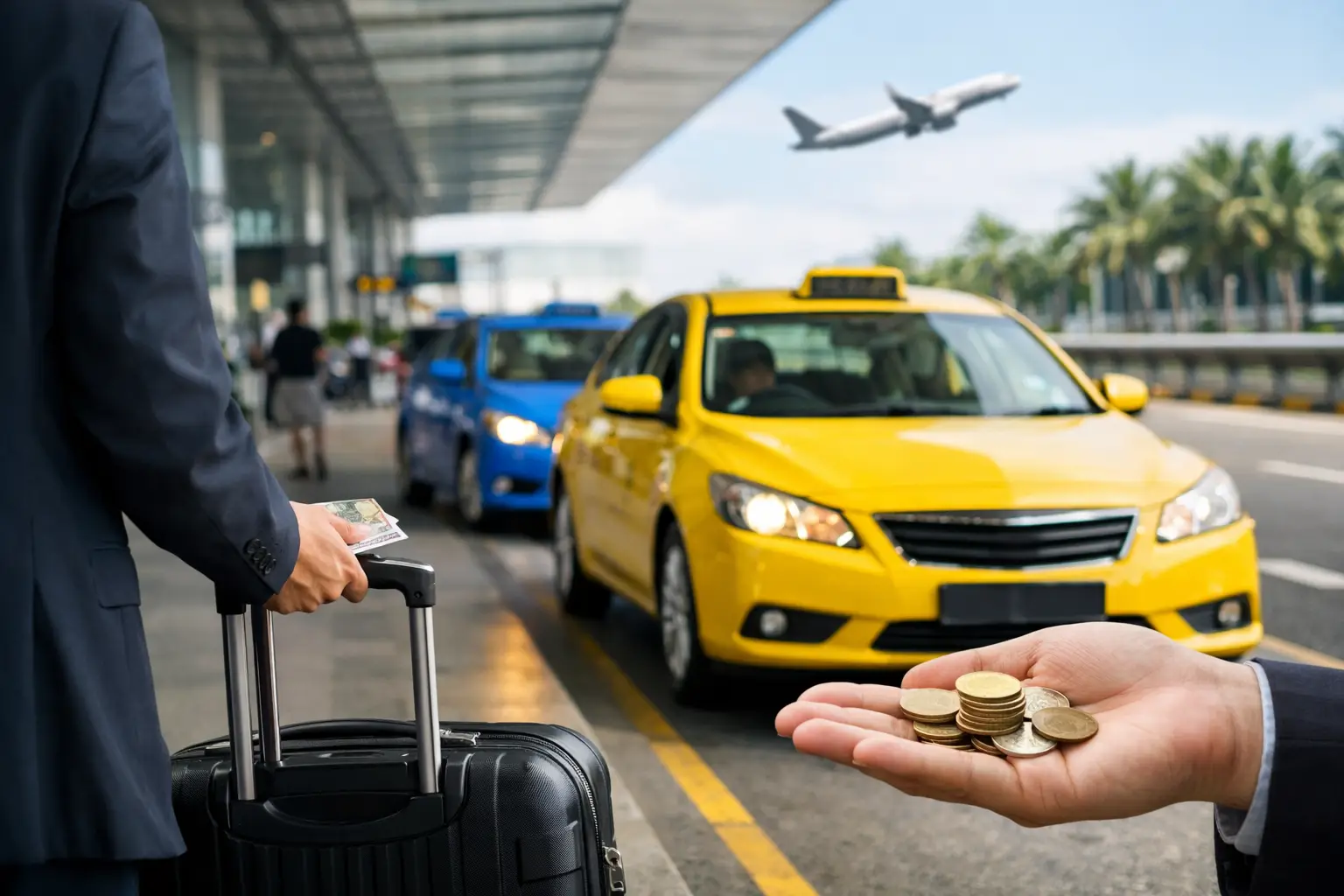
Landing at Changi after a long-haul flight, the fare matters - but so does what happens between baggage claim and your destination. If you are asking how much is airport taxi in Singapore, the short answer is that a standard metered taxi from the airport often lands somewhere around SGD 20 to SGD 40 for many city trips, while premium private airport transfers usually start higher in exchange for fixed pricing, vehicle class, and tighter service control.
That broad range is useful, but not sufficient if you are arranging transport for an executive arrival, a family with luggage, or a corporate guest on a schedule. In Singapore, airport transfer pricing is shaped by more than distance alone. Surcharges, time of day, vehicle type, routing, waiting time, and service standards all affect the final number.
How much is airport taxi in Singapore for most travelers?
For a typical ride from Changi Airport to central areas such as Marina Bay, Orchard, Bugis, or the CBD, a regular taxi fare is commonly in the SGD 20 to SGD 40 range before you factor in every possible surcharge scenario. Shorter trips may come in below that, while longer rides to outer residential districts can go higher.
The reason there is no single fixed answer is simple. Standard airport taxis in Singapore generally run on a metered basis. That means the final fare depends on the actual route taken, prevailing traffic conditions, and any airport or peak-period surcharges that apply when you travel.
If your priority is simply getting from the terminal to the city with reasonable efficiency, a regular taxi is often enough. If your priority is budget certainty, a specific vehicle class, meet-and-greet handling, or executive presentation, metered pricing becomes less attractive.
What affects airport taxi prices in Singapore?
The biggest cost driver is still distance, but in Singapore the operational details matter. Changi Airport is well connected to the city, so base travel time is often manageable. Even so, the final fare can shift depending on when you land and where you are headed.
Airport surcharges are one of the first things travelers notice. These are commonly added on top of the metered fare for pickups at Changi Airport. Then there are peak-hour surcharges, late-night surcharges, and in some cases location-based additions depending on the destination or road pricing environment.
Traffic also plays a role, even in a relatively efficient road network. A metered taxi charges according to movement and waiting conditions, so congestion can increase cost. That may not be dramatic on every trip, but it matters when arrivals line up with commuter peaks, heavy rain, or major event traffic.
Luggage and passenger count can affect your decision even when they do not directly change the metered fare. A solo traveler with one cabin bag has far more flexibility than a family of four with check-in luggage, strollers, or golf bags. In that case, the cheapest option on paper may not be the most workable one in practice.
Standard taxi vs premium airport transfer
This is where pricing needs context. A standard airport taxi is usually the lower-cost option upfront. You queue, board the next available vehicle, and pay a metered fare plus applicable surcharges. For many leisure travelers, that is perfectly acceptable.
A premium airport transfer operates differently. The rate is usually fixed in advance, the vehicle class is pre-assigned, and the pickup process is managed rather than improvised. That means you are paying not just for the ride, but for predictability, dispatch oversight, flight tracking, and a chauffeur standard that is designed for business travel or VIP handling.
In practical terms, a premium sedan airport transfer in Singapore will usually cost more than a regular taxi. Depending on vehicle class and service scope, the fare may start from roughly the mid-SGD 50s and move upward for luxury sedans, premium MPVs, larger group vehicles, or after-hours requirements. The difference is not just branding. It reflects a different operating model.
For an executive arriving for meetings, a delayed flight, or a client being hosted by your company, fixed-rate service often makes budgeting and coordination easier. You know the vehicle type, you know the service level, and you remove the uncertainty of queue conditions and variable metered outcomes.
How much is airport taxi in Singapore compared with fixed-rate chauffeur service?
If the only benchmark is the cheapest possible ride, metered taxis usually win. If the benchmark is controlled arrival experience, fixed-rate chauffeur service often delivers better value.
A metered taxi may cost SGD 28 on one trip and SGD 37 on another for a similar route once surcharges and traffic are factored in. A fixed-rate airport transfer may appear higher at booking, but it gives procurement teams, executive assistants, and travelers a cleaner planning framework. There is less ambiguity around reimbursement, guest communication, and service expectations.
This becomes even more relevant for B2B bookings. If you are moving multiple delegates, speakers, or senior staff, inconsistent arrival handling creates operational drag. Fixed-rate airport transfers allow transport planning to be structured by passenger count, baggage profile, and service window instead of being left to ad hoc taxi availability.
When a regular airport taxi makes sense
There are many situations where a standard taxi is entirely reasonable. If you are traveling alone, arriving at a non-peak hour, heading to a straightforward city hotel, and do not need vehicle selection or meet-and-greet support, a regular taxi is usually efficient.
It also works well when flexibility matters more than presentation. Some travelers simply want the next available car and do not mind a fare that varies modestly from trip to trip. In those cases, the taxi rank model fits the requirement.
For casual travel, the trade-off is acceptable. For time-sensitive or client-facing travel, that same trade-off may not be worth it.
When private airport transfer is the better choice
Private airport transfer makes more sense when the arrival is part of a larger schedule. That includes executives heading directly to meetings, families who need a larger vehicle, and companies receiving VIP guests who should not be left to navigate the taxi rank after landing.
It also matters when there are multiple operational touchpoints. Flight delays, terminal coordination, special luggage, and multi-stop itineraries are easier to manage when a dispatcher reviews the job and the chauffeur is assigned in advance. For group movements, the gap is even wider. Once you move beyond one or two passengers, vehicle planning becomes a logistics exercise, not just a fare question.
That is why premium operators such as Limo Z position airport transfers differently from standard street-hailed or rank-based taxi service. The value is in transport control, vehicle suitability, and arrival management, not simply in replacing one car with another.
Pricing by vehicle type
If you are budgeting airport transport in Singapore, think in categories rather than a single fare figure. Standard taxis sit at the lower end and are suited to basic point-to-point travel. Executive sedans move up in price but offer cleaner presentation and fixed booking logic. Luxury sedans go further for VIP service and discreet corporate travel.
Premium MPVs are often the practical choice for travelers with more luggage or small groups. They usually cost more than sedans, but less than booking multiple smaller vehicles. For delegations, event arrivals, and family groups, that can be the more efficient decision overall.
Minibuses and coaches shift the conversation entirely. At that point, you are no longer comparing against a typical airport taxi fare. You are planning manpower, staging, arrival sequencing, and passenger flow. Pricing is generally quotation-based because the route, waiting pattern, and number of vehicles determine the scope.
A realistic way to budget your airport ride
If you are an individual traveler, budget around SGD 20 to SGD 40 for a standard airport taxi to many city destinations, while allowing extra room for surcharges and timing effects. If you need a premium transfer, expect a higher fixed rate based on vehicle class and service level.
If you are booking for executives or guests, do not evaluate price in isolation. Consider whether the ride needs name-board meet and greet, professional chauffeur presentation, luggage support, delay monitoring, or a specific pickup window. Those details affect cost, but they also reduce risk.
For companies and event planners, the best budgeting approach is to define the movement first. How many passengers, how much luggage, what service hours, and what level of arrival handling? Once those variables are clear, the right transport format becomes obvious.
The real question is not only how much is airport taxi in Singapore. It is how much certainty you need when the traveler lands. If the trip is casual, a taxi may be enough. If the arrival matters, paying for control is often the smarter fare.