
How to Book Airport Taxi in Singapore
30 June 2026
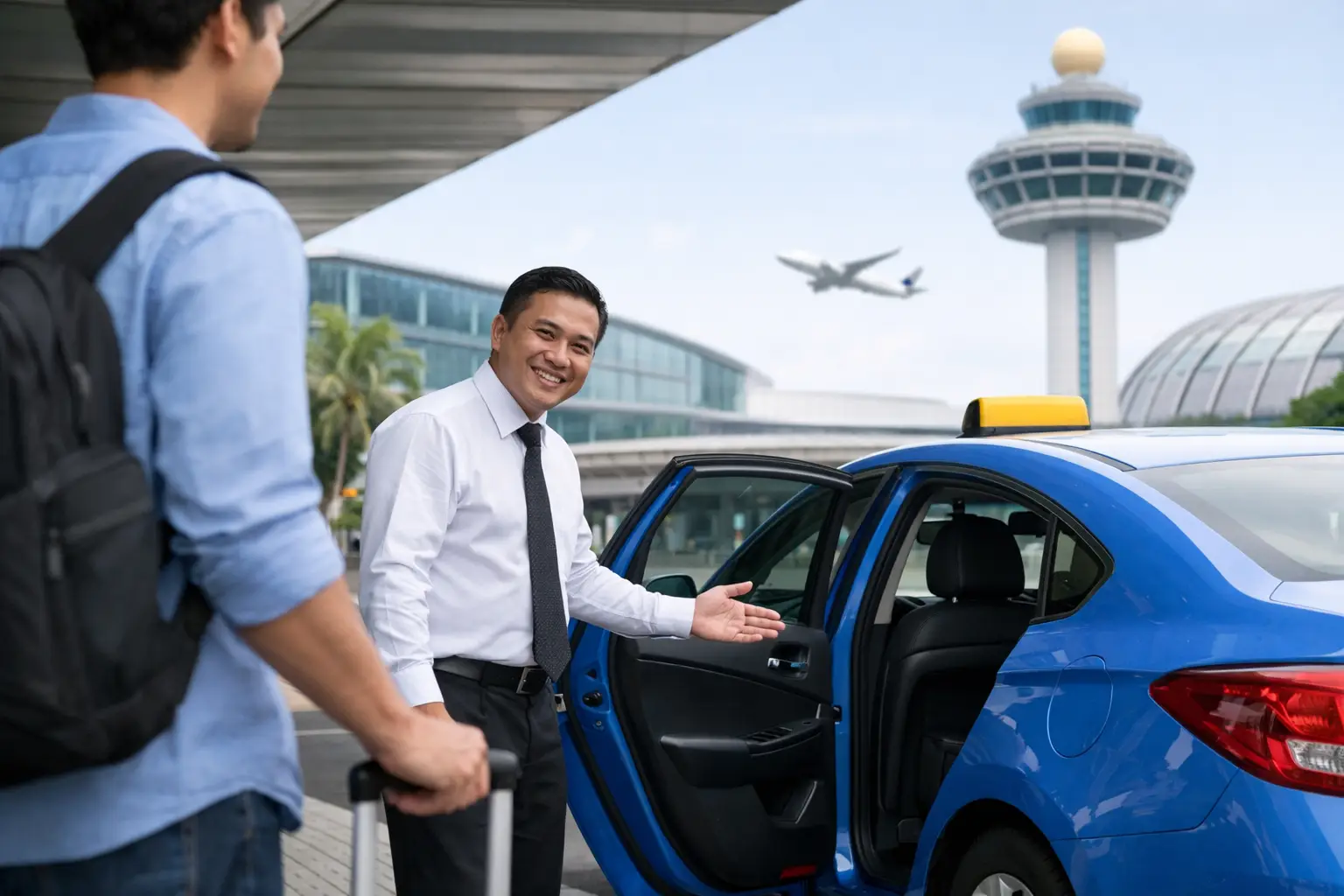
A late-night arrival at Changi looks easy on paper until the line at ground transport is longer than expected, your luggage count changes, or your traveler needs a discreet executive pickup instead of the next available cab. That is why knowing how to book airport taxi in Singapore properly matters. The right booking is not just about getting a ride. It is about matching vehicle type, arrival timing, baggage load, and service level to the trip.
For some travelers, a standard point-to-point transfer is enough. For others, especially executives, families with multiple bags, or companies moving guests on a fixed schedule, the booking process needs more control. Singapore is efficient, but airport transport can still go wrong when details are vague. A good booking starts with clarity.
How to book airport taxi in Singapore without mistakes
The first decision is whether you need an on-demand taxi or a pre-booked airport transfer. If your priority is simply leaving the airport as quickly as possible and you are traveling light, a regular airport taxi can work. If you need a named meet-and-greet, a larger vehicle, fixed pricing, flight monitoring, or a more polished arrival experience, pre-booking is usually the better choice.
That distinction matters more than many travelers expect. A taxi queue gives flexibility, but not much control over vehicle class, driver briefing, or presentation. A pre-arranged airport transfer gives control, but only if you provide the right details at the time of booking.
Start with the trip profile
Before you book, define the movement clearly. Are you booking for one person, a senior executive, a family with strollers, or a delegation arriving on the same flight? Is the destination a hotel, a meeting venue, a private residence, or multiple stops across the city? Is this a simple arrival transfer, or does the traveler also need a return pickup later the same day?
These details affect vehicle selection immediately. A sedan may be ideal for a solo business traveler with one suitcase. An MPV is often the safer choice for a small group or anyone carrying oversized baggage. If you are moving six or more passengers, the discussion shifts from airport taxi to coordinated transport planning with a minibus or coach. That is where many booking errors begin - people book by passenger count and forget to account for luggage, child seats, or presentation standards.
Choose the right service level
In Singapore, airport transport generally falls into three practical categories: standard taxi service, private airport transfer, and chauffeur-driven executive transfer. The right choice depends on what you are optimizing for.
A standard taxi is functional. It is usually the least structured option and best for simple, low-risk trips. A private airport transfer is better when pricing, pickup instructions, and vehicle type need to be confirmed in advance. A chauffeur-driven executive transfer is the right fit when punctuality, discretion, and professional presentation are part of the requirement, not just a nice extra.
For corporate travel, service level is rarely cosmetic. If a regional director, investor, or speaker is arriving in Singapore, the transport is often part of the wider guest experience. A missed message or an unsuitable vehicle reflects poorly on the host.
What information you need before booking
Most airport transfer problems can be traced back to incomplete booking details. Before confirming any reservation, prepare the traveler name, contact number, flight number, arrival date and time, airline, destination, and baggage count. If there are special requirements, such as a wheelchair, child seat, VIP handling, or multiple pickups, include them from the start.
Flight number is especially important. Without it, there is no reliable way to monitor delays, early arrivals, or terminal changes. Many travelers assume the arrival time alone is enough. It is not. A booking tied to a flight number is far easier for dispatchers to manage accurately.
You should also specify whether you want curbside pickup or meet-and-greet service inside the terminal. Meet-and-greet is often preferred for first-time visitors, senior guests, families, and corporate arrivals because it reduces friction after landing. The traveler does not need to search for the car or coordinate by phone in a busy arrival zone.
Be precise about luggage
This is one of the most overlooked parts of how to book airport taxi in Singapore. Two passengers do not always fit comfortably in a sedan if they have large suitcases, garment bags, and carry-ons. Likewise, a group of four may technically fit in a standard car, but not with trade show materials, golf bags, or shopping luggage.
If you understate baggage, you risk delays at pickup or last-minute vehicle changes. If you are unsure, book one class up. In airport transfers, too much space is a minor cost issue. Too little space becomes an operational problem.
When to book and how far ahead
If you are using a normal taxi queue at Changi, there is no advance planning. But if you want a scheduled airport transfer, book as early as the itinerary is firm. For standard executive travel, 24 to 48 hours is generally workable. For peak travel periods, family travel, premium vehicle requests, or group transport, earlier is better.
The lead time matters even more for corporate movements. If your team is arranging transport for multiple arriving guests, event speakers, or a conference delegation, booking early gives the operator time to review routing, assign the right vehicles, and structure the schedule properly. This is not just about availability. It is about reducing risk.
For large group arrivals, a quote-based process is usually more appropriate than trying to place multiple one-off bookings. Once you have several flight schedules, multiple terminals, and mixed passenger groups, transport becomes a coordination task rather than a simple reservation.
Fixed-rate booking vs quoted transport
Individual airport transfers are often booked at a fixed rate online. That works well when the itinerary is straightforward: one vehicle, one arrival, one destination. It is quick and efficient.
Quoted transport is better when the movement has complexity. Examples include a VIP delegation requiring multiple executive cars, a company welcoming overseas staff on staggered arrivals, or an event organizer moving attendees from Changi to several hotels. In those cases, the operator needs to assess fleet mix, staging, waiting time, routing, and contingency planning.
The trade-off is simple. Fixed-rate booking is faster. Quoted transport gives more control. If the trip carries reputational or scheduling pressure, control usually matters more.
How to evaluate a provider before you confirm
Price matters, but airport transport should not be selected on price alone. Look at the operating structure behind the service. Does the provider review bookings through dispatch, track flights, and assign vehicles based on actual passenger and baggage needs? Are the vehicles licensed and commercially insured? Is there a clear protocol for late arrivals or terminal changes?
These are not small details. They are the difference between a car service and a managed transfer operation.
For premium and executive travel, driver presentation also matters. A professional chauffeur should know the flight details, understand the pickup point, and handle the arrival calmly. That is especially relevant for clients who need discreet service or are landing on a tight business schedule.
A structured operator such as Limo Z is typically a better fit when the airport transfer carries more than routine importance - for example, C-suite arrivals, diplomatic guests, MICE transport, or any movement where timing and presentation are under scrutiny.
Common booking mistakes to avoid
The most common mistake is booking the cheapest vehicle without considering luggage and comfort. The second is entering incomplete flight details. The third is assuming every airport transfer includes meet-and-greet, waiting time, or flight monitoring when those features may depend on the service type.
Another frequent issue is treating a group movement like a set of individual rides. That can work for small, informal travel. It works poorly for corporate arrivals where guests need to be received consistently and moved on schedule.
If your requirement includes multiple travelers, executive presentation, or any time-sensitive program, think like an operations manager, not just a passenger. The more structured the booking, the smoother the arrival.
The best booking approach for different travelers
A solo leisure traveler can usually prioritize speed and simplicity. A pre-booked transfer is helpful, but not always necessary. A business traveler on a tight agenda should prioritize fixed arrangements, flight tracking, and a direct pickup plan. Families should choose based on luggage space first, then comfort. Corporate bookers and event planners should focus on dispatch oversight, fleet suitability, and the provider's ability to scale.
That is the real answer to how to book airport taxi in Singapore: book according to the consequences of getting it wrong. If a delay is merely inconvenient, a simple option may be enough. If the arrival is tied to client hospitality, executive scheduling, or group logistics, a more controlled booking is worth it.
The smoothest airport transfers are rarely the ones booked in a rush. They are the ones booked with the right details, the right vehicle, and a provider built to manage the trip properly from touchdown to drop-off.