
Limousine Service for Business Travel Singapore
6 July 2026
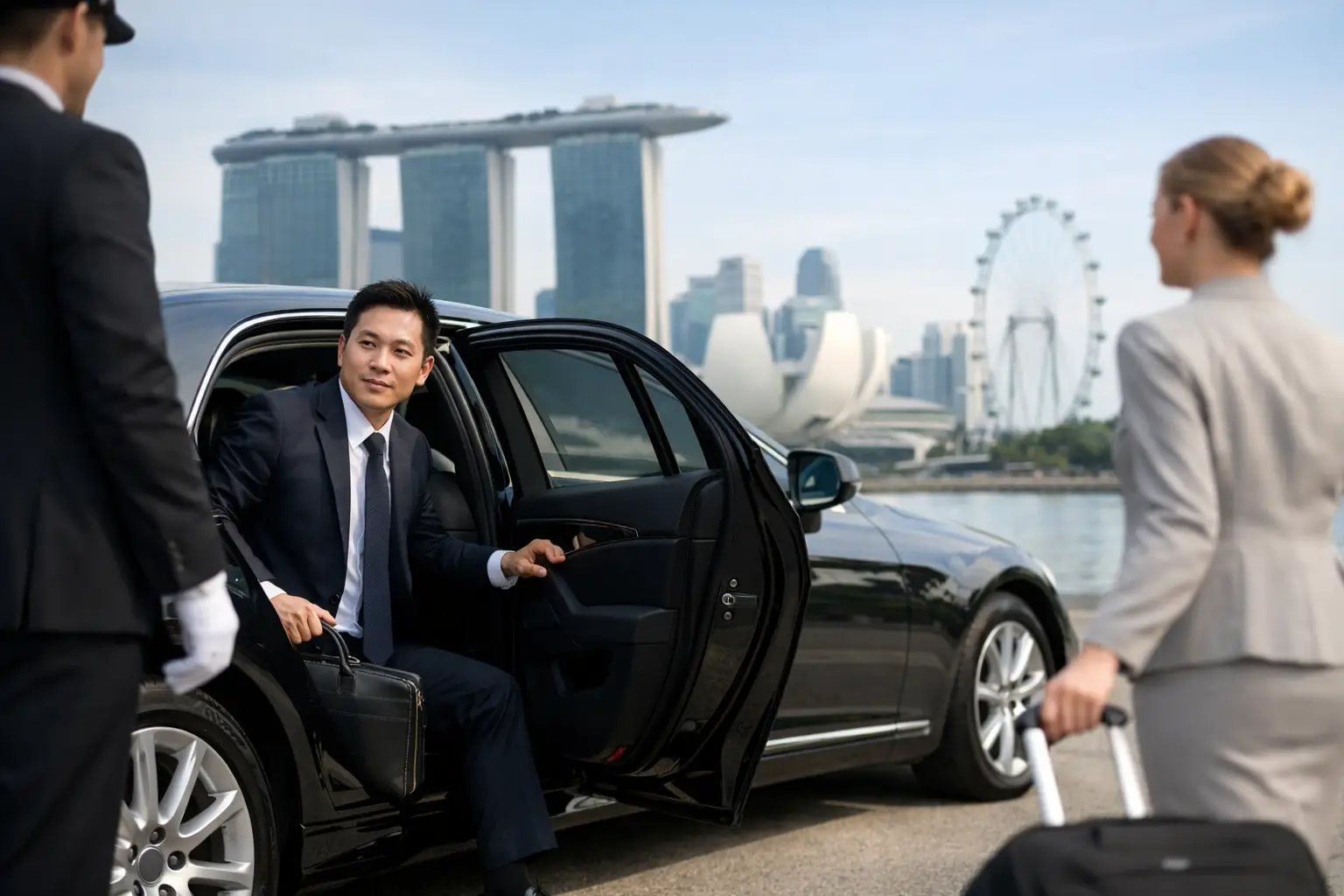
A delayed airport pickup can undo the impression a company spent weeks preparing. For executives, clients, and visiting teams, ground transport is not a minor detail. It sets the pace for the day, affects arrival confidence, and reflects how seriously a business handles time. That is why limousine service for business travel Singapore is often less about luxury alone and more about control, discretion, and execution.
Singapore is efficient, but business itineraries here can still be tight. A senior executive may land at Changi, head straight to a board meeting in Marina Bay, continue to a site visit in Jurong, and finish with a client dinner in Orchard. An event organizer may be moving speakers, sponsors, and VIP guests across multiple venues on staggered schedules. In both cases, transport has to do more than show up. It has to support the agenda.
Why limousine service for business travel Singapore matters
Business travel has different standards from leisure transport. The car matters, but the operating structure behind it matters more. A polished sedan means little if the chauffeur misses a terminal pickup point, if dispatch is not monitoring arrivals, or if the vehicle allocation changes at the last minute without proper review.
For corporate travelers, the value of a limousine service is consistency under pressure. That includes flight tracking for airport transfers, early-arrival standards for chauffeur dispatch, and routing that accounts for timing rather than just distance. Singapore's road network is well organized, but business schedules still depend on traffic flow, venue access, pickup restrictions, and the practical reality of moving people with luggage, presentation materials, or security expectations.
There is also the issue of presentation. When a company arranges executive transport, it is making a statement to a board member, investor, regional leader, or overseas client. The vehicle should be clean, properly insured, and aligned with the occasion. The chauffeur should be discreet, professionally presented, and trained to handle business-facing service rather than standard point-to-point driving.
What corporate travelers should expect
A proper business-class ground transport provider should be structured for reliability, not simply positioned as premium. That starts with booking clarity. For a straightforward airport transfer or city transfer, fixed-rate booking is usually the right fit because it gives the traveler or assistant immediate confirmation and cost visibility. For roadshows, delegations, or multi-stop schedules, hourly chauffeur booking often makes more sense because meetings run over, routes shift, and waiting time needs to be managed cleanly.
For larger programs, the expectation changes again. A conference transport plan may involve executive sedans for speakers, MPVs for small teams, minibuses for delegates, and coaches for general attendee flows. At that point, the provider is no longer only supplying cars. It is functioning as a transport operations partner with dispatch oversight, staging plans, and escalation procedures.
That distinction matters. A single executive trip can tolerate very little friction. A multi-vehicle corporate move can create operational problems fast if there is no central control. Companies should look for a provider that can handle both without switching service standards.
Airport transfers are the first test
Airport arrivals are where business transport providers prove whether they are disciplined. Flights arrive early, late, or after gate changes. Travelers may clear immigration quickly or be delayed at baggage claim. A dependable chauffeur service accounts for these variables before the passenger calls.
This is where flight tracking and dispatcher review are practical advantages, not sales language. If a vehicle is assigned based on a static arrival time and no one is monitoring changes, the pickup becomes reactive. For a corporate traveler, that can mean waiting curbside, rushing to reconnect with the chauffeur, or starting the visit with unnecessary friction.
The better standard is simple: monitor the flight, dispatch the vehicle with time to spare, and position the chauffeur for a clear handoff. For executives arriving after long-haul travel, that calm arrival process is often the most valuable part of the service.
Choosing the right vehicle for the business use case
Not every business trip needs the same fleet category. An executive sedan is usually suitable for solo travel, airport pickups, and formal client movements where presentation is central. A luxury sedan may be more appropriate for VIP guests or diplomatic-level travel where comfort and appearance carry extra weight.
Premium MPVs are often the better option for small groups, travelers with additional luggage, or roadshow schedules that require more cabin flexibility. For company teams, minibuses and mini coaches bring efficiency without the fragmentation that comes from booking multiple smaller vehicles. Full-size coaches are useful when event traffic, staff movement, or large delegation schedules need central coordination.
The trade-off is straightforward. Smaller vehicles offer privacy and a higher-touch feel. Larger vehicles improve control, punctuality across groups, and budget efficiency per passenger. The right choice depends on whether the priority is executive hospitality, group logistics, or a balance of both.
When hourly chauffeur service makes more sense than point-to-point
Some business itineraries are fixed. Airport to hotel, hotel to office, office to airport. In those cases, a point-to-point limousine booking is efficient and easy to manage. But many executive schedules in Singapore are not that tidy.
Investor meetings run long. Site inspections finish early. Lunch venues change. Last-minute calls add another stop before the airport. If the day includes uncertainty, hourly chauffeur service usually gives better operational control than trying to chain together multiple one-way bookings.
It also reduces administrative burden. Executive assistants, office managers, and travel coordinators do not have to rebuild transport every time the schedule shifts. The chauffeur remains assigned, dispatch stays informed, and the traveler can keep moving without negotiating each change. For high-value business days, that flexibility is often worth more than the slight cost premium.
The corporate side of limousine service for business travel Singapore
For B2B buyers, the decision is rarely about one ride. It is about whether the transport partner can support business continuity. That applies to conferences, executive visits, client entertainment, business park shuttles, employee transport, and multi-day events where transport affects attendance, timing, and overall experience.
A capable provider should be able to quote around the real operating requirement, not force every scenario into a standard booking form. If a company needs a morning shuttle loop for staff, a VIP transfer plan for visiting leadership, or a coordinated arrival schedule for a regional sales meeting, the provider should scope fleet, timing, routing, and manpower accordingly.
This is where operational depth separates premium transport from true corporate mobility support. Fleet range matters because companies often need a mix of service levels in the same project. Dispatch matters because vehicle movements have to be tracked and adjusted live. Chauffeur standards matter because some passengers expect executive protocol while others simply need reliable group transport.
Limo Z is positioned in that middle ground effectively, combining executive chauffeur service with structured transport coordination for larger corporate and event requirements.
What to check before booking
The strongest providers tend to be transparent about how they operate. Licensed and insured vehicles should be standard. Chauffeurs should be trained for executive service, not only basic passenger handling. There should also be a dispatch function that actively reviews movements rather than leaving each trip to individual driver coordination.
Response model is another useful indicator. If a provider can instantly confirm simple bookings while also handling manual quotations for events and group transport, that usually signals a more mature operation. It suggests the company understands the difference between a direct airport transfer and a transport plan that needs fleet scheduling, staging, and itinerary review.
Price still matters, of course. But business buyers usually pay more attention to failure risk than headline rate. The cheapest option becomes expensive quickly if a VIP is left waiting, if a meeting starts late, or if an event move collapses because the fleet was not coordinated properly.
A better standard for business travel on the ground
Ground transport in Singapore should feel composed, not improvised. Whether the requirement is a single executive airport transfer or a complex corporate movement plan, the goal is the same - get the passenger to the right place, on time, with the right level of discretion and control.
That is what makes a limousine service valuable in business travel. Not the badge on the vehicle, but the discipline behind the booking, the dispatch, the routing, and the handoff. When those details are handled properly, the traveler can focus on the meeting instead of the movement.