
MICE Transport Planning Singapore Done Right
7 July 2026
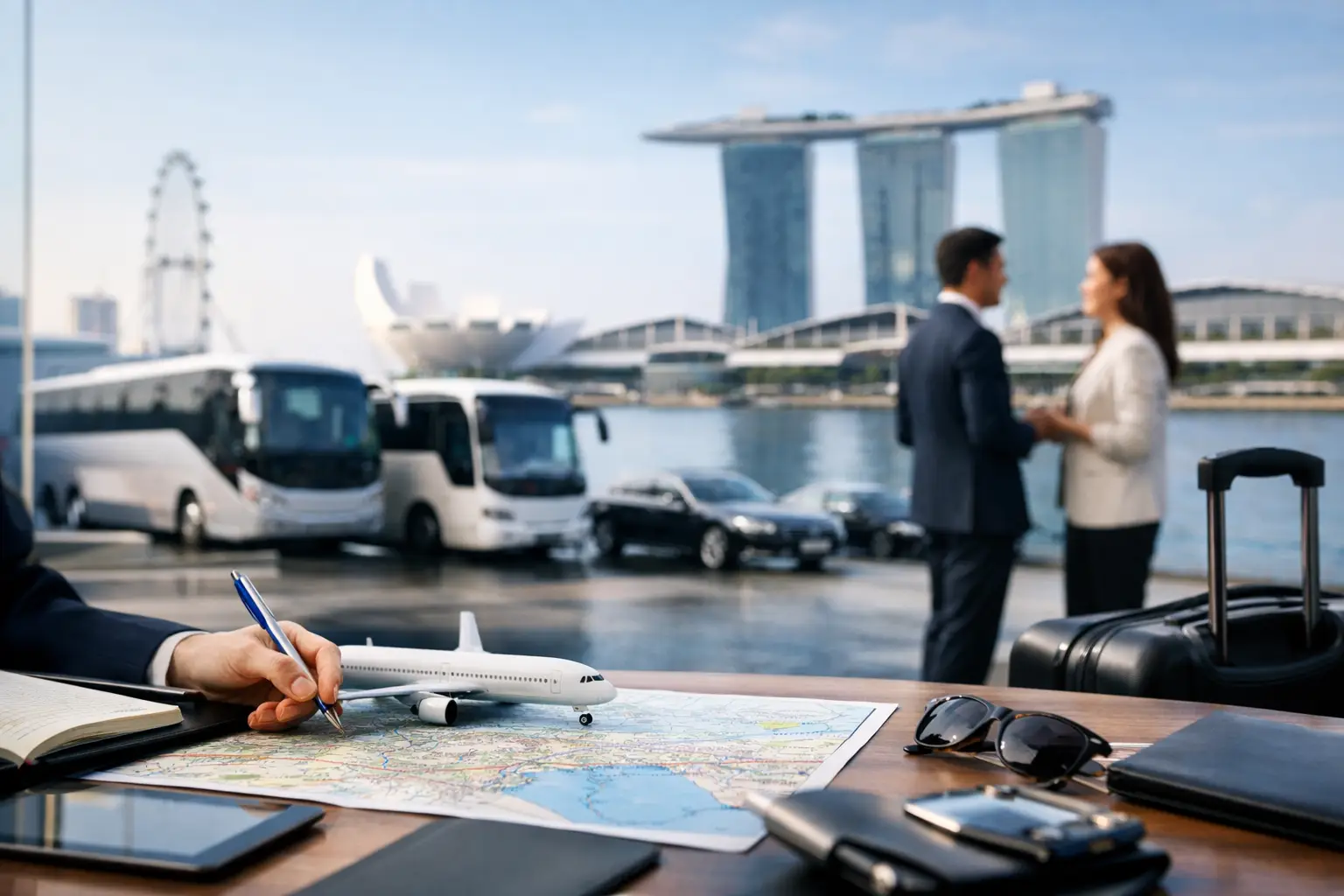
A conference agenda can look perfect on paper and still fall apart at the curb. The usual failure point in mice transport planning singapore is not the venue or the run sheet - it is movement between airport, hotel, meeting site, dinner venue, and return transfers when real traffic, flight delays, and last-minute attendee changes start to hit.
For event organizers, corporate admins, and operations teams, transport is not a side task. It is part of the event experience, part of the schedule, and often part of the client impression. If a VIP arrives late, a delegate gets sent to the wrong hotel, or a coach misses a loading window, the issue is immediately visible. Good planning prevents that. Great planning also gives the organizer room to breathe when plans change.
What MICE transport planning Singapore really involves
MICE transport planning Singapore is not simply booking a few vehicles and assigning pickup times. It is the coordination of people movement against a live event schedule, often across multiple sites, traveler types, and service expectations.
A typical program may include airport arrivals for overseas delegates, separate executive transfers for sponsors or speakers, shuttle loops between hotels and a convention center, evening dine-around transport, and final departure runs over several days. Each movement has different requirements. A board member landing at midnight expects a discreet executive pickup. A 40-person delegation needs accurate headcounts, staging discipline, and clear boarding instructions. Staff moving between venues may prioritize capacity and timing over luxury.
That is why transport planning has to start with segmentation. Not every passenger should be handled the same way, and not every route should be served by the same vehicle type. The better the movement plan reflects the actual passenger profile, the fewer operational gaps appear later.
Start with movement design, not vehicle count
One of the most common planning mistakes is asking how many cars or buses are needed before mapping how guests will actually move. Vehicle count matters, but movement design comes first.
Begin with the event schedule in practical terms. When do travelers land? How tightly are airport arrivals clustered? Which hotels are official? Are there separate pickup zones for VIPs, speakers, exhibitors, and general attendees? Does the convention venue have restrictions on coach access, holding areas, or loading times? These details shape the fleet plan more than headline attendance numbers do.
A 300-person event may need fewer vehicles than a 120-person executive summit if the larger group arrives in waves and stays at one hotel, while the smaller group has private transfers, sponsor movements, and off-site dinners across the city. The trade-off is between efficiency and service level. Shared shuttles reduce cost and can work well for delegates. Dedicated chauffeur vehicles improve timing control and presentation for leadership groups.
Strong planners also account for dead mileage and turnover time. A minibus that drops one group at a ballroom is not automatically ready for the next assignment if the pickup bay is congested or the next route requires repositioning. On paper, the same vehicle can appear available. In live operations, it may not be.
Fleet matching for different event profiles
In mice transport planning singapore, fleet selection should reflect both passenger volume and service expectation. That sounds obvious, but many event budgets become inefficient because the wrong class of vehicle is used for the wrong segment.
Executive sedans and luxury sedans suit C-suite travelers, keynote speakers, diplomatic guests, and client-facing arrivals where presentation matters. Premium MPVs work well for small groups with luggage, hosted airport transfers, and senior delegates who need more room without moving to a full coach solution.
Minibuses and mini coaches are often the most flexible choice for MICE programs. They can manage hotel shuttles, venue loops, and small delegation movements without the footprint of a large coach. Full-size coaches make sense when passenger loads are stable, boarding points are controlled, and the venue can handle larger vehicles efficiently.
There is also a brand consideration. If the event positions itself as premium, guests notice when transport feels improvised. Mixed fleets are normal in large programs, but the service design should still feel intentional. VIP transfers should not be handled with the same logic as mass delegate transport, and staff shuttle planning should not compromise the guest-facing experience.
Airport arrivals are where the schedule is won or lost
Airport transport is rarely just airport transport during a MICE program. It is the first live operational test. If arrivals are poorly managed, every downstream schedule becomes harder.
Flight tracking matters, but it is only one part of control. Organizers also need a clear arrival manifest, guest name matching, terminal-specific instructions, luggage assumptions, host contact details, and fallback procedures if a traveler misses the meet point. International delegates often arrive tired, connected to multiple flights, and unfamiliar with local pickup procedures. The handoff needs to be simple.
For VIP airport movements, discretion and timing matter more than volume efficiency. For larger delegate groups, the challenge is throughput. If multiple arrivals land within a narrow window, a mix of dedicated transfers and grouped departures may be the right answer. It depends on the event profile, sponsor commitments, and guest expectations.
Senior dispatcher oversight adds value here because airport conditions change quickly. Delayed flights, early landings, baggage delays, and simultaneous arrivals all affect vehicle release timing. A transport program that relies only on static schedules will struggle the moment the first flight shifts.
The routing detail most organizers underestimate
Most transport delays in Singapore are not caused by distance alone. They come from timing friction at hotels, exhibition centers, loading bays, security checkpoints, and curbside congestion.
That is why routing for MICE events has to consider more than drive time. Pickup sequencing, holding locations, traffic patterns by hour, venue access rules, and driver briefing quality all affect performance. A route that is technically short can still fail if 80 guests are boarding from two hotel towers with different lobby flows.
Good routing also accounts for event rhythm. Morning conference arrivals have one pattern. Gala dinner departures have another. The post-session surge at a convention center can create bottlenecks if every shuttle is scheduled to arrive at the same minute. Staggering departures often improves actual service, even if the original run sheet looks cleaner with fixed intervals.
For multi-day programs, route refinement should continue after day one. Real boarding times, actual traffic conditions, and guest behavior often reveal opportunities to tighten or adjust the schedule. The best transport plans are structured, but not rigid.
Communication is part of transport operations
Even a well-built fleet plan can underperform if passenger communication is weak. Guests need to know where to go, what vehicle they are boarding, and what happens if they are late.
For executive movements, communication is usually handled discreetly through hosts, assistants, or event coordinators. For larger delegate groups, instructions need to be direct and easy to follow. Hotel lobby signage, departure windows, coach numbering, and on-site marshaling reduce confusion and help vehicles leave on time.
This is especially important when the event includes multiple hotels or parallel sessions. Guests tend to assume transport works like a hotel taxi queue. MICE transport does not. It operates against a coordinated manifest and schedule. Clear instructions protect both punctuality and guest experience.
Why experienced dispatch matters during live events
The difference between a transport vendor and a transport operations partner often shows up after the first disruption. A speaker meeting runs late. A sponsor requests an extra vehicle. Two flights arrive closer together than expected. One hotel loading zone becomes congested. The question is not whether changes happen. They will.
What matters is whether dispatch can reassign vehicles, update routing, communicate with chauffeurs, and preserve service standards without creating a visible problem for the client. This is where disciplined review, live coordination, and commercially insured, properly licensed fleet deployment become more than back-office details.
For high-stakes programs, planners should look beyond price and ask harder questions. Who is reviewing the movement plan? How are contingencies handled? Is there event-day oversight beyond driver dispatch? Can the fleet scale if attendance changes? Those answers usually tell you more than a rate sheet.
Limo Z is built around this operational model, which is why MICE programs, executive transfers, and group movements are planned with the same seriousness as the event itself.
A practical standard for better MICE transport planning Singapore
If you want MICE transport planning Singapore to work under pressure, build it around four realities: passenger segments differ, routes behave differently in live conditions, venue access can change the plan, and communication is operational, not optional.
That usually means planning further upstream than many teams expect. Lock the event schedule early where possible, confirm hotel patterns, separate VIP and delegate transport logic, and leave room for controlled adjustments once the program is live. Efficiency matters, but so does presentation. Cost control matters, but so does resilience.
The strongest transport plans are not the most complicated. They are the ones with clear assumptions, the right fleet mix, disciplined dispatch, and enough operational control to absorb the ordinary surprises that come with business events. When that is in place, transport stops being a risk item and starts doing what it should - moving people on time, with the right level of service, and without forcing the organizer to chase every vehicle.