
Private Bus Charter Singapore for Corporate Groups
12 July 2026
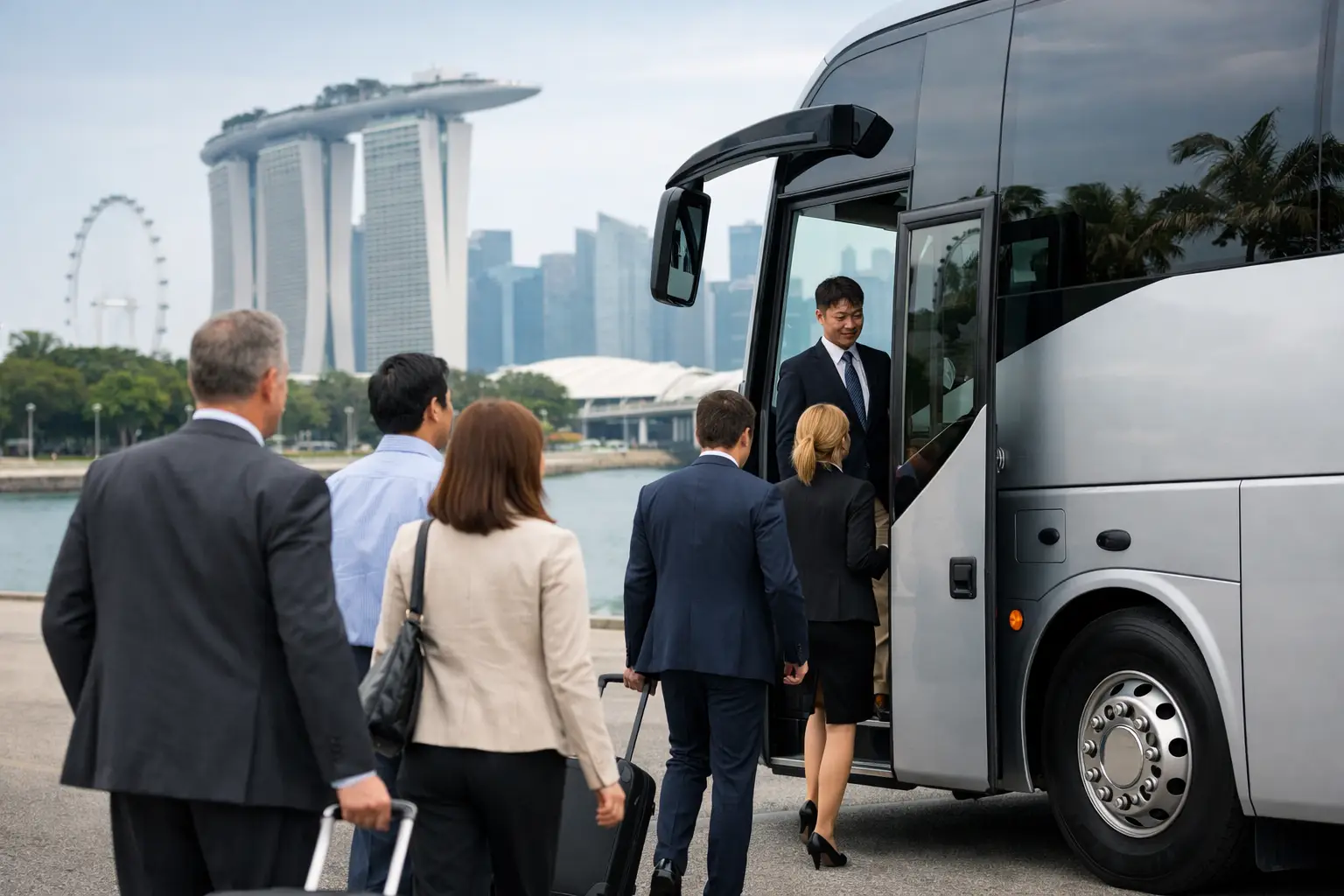
A conference agenda can be perfectly timed and still unravel at the curb. A delayed shuttle, an undersized coach, or unclear pickup instructions can leave delegates waiting, staff fielding calls, and VIP guests arriving after the program has begun. A private bus charter Singapore service should solve that operational problem, not simply provide a vehicle.
For corporate groups, MICE organizers, HR teams, and event planners, the right charter is built around movement control: who is traveling, where they must be, what they are carrying, and how the plan adjusts when Singapore traffic, flight schedules, or venue access changes. Premium group transport is measured by more than the coach itself. It is measured by the quality of routing, dispatch oversight, driver briefing, and on-the-ground coordination.
When a Private Bus Charter Singapore Service Makes Sense
Private bus charters are suited to movements where multiple passengers need to travel together on a fixed or managed schedule. This may be a single airport arrival transfer for an overseas delegation, a full-day conference shuttle between hotels and a convention venue, or a recurring employee route connecting an MRT station to an office or industrial site.
The value is particularly clear when timing and presentation matter. Rather than asking guests to navigate separate rides or reimburse individual transport claims, an organizer can provide a defined pickup point, a named vehicle, and a planned arrival window. For executive groups, this also creates a more controlled and discreet travel experience.
Common charter requirements include airport transfers for delegations, city tours for incentive groups, hotel-to-venue shuttles, staff transport, business park services, production crews, wedding guest transfers, and corporate roadshows. The operational model changes with each use case. A one-way airport transfer needs flight monitoring and luggage planning. A multi-day conference needs vehicle rotations, standby time, loading zones, and a clear escalation contact.
Start With the Movement Plan, Not the Vehicle
A coach capacity figure alone does not produce a workable transport plan. Before selecting a vehicle, define the operating details: passenger count, luggage volume, pickup and drop-off points, required arrival time, travel dates, and whether the group will move together throughout the day.
Passenger count should include hosts, guides, coordinators, and last-minute attendees, not only confirmed guests. It is also prudent to allow a small capacity buffer where practical. Filling every seat may look efficient on paper, but it leaves no room for luggage, equipment, accessibility needs, or unexpected additions.
The itinerary matters just as much. A route from Changi Airport to a central hotel is different from a route involving several hotel pickups before a morning meeting. Multiple stops can be managed effectively, but each stop adds boarding time and introduces the possibility of delayed departures. For high-stakes programs, organizers should set a reporting time before the actual departure time and identify a single group lead for each vehicle.
At Limo Z, charter requests are manually scoped rather than treated as standard point-to-point bookings. That allows the transport plan to account for fleet availability, route timing, passenger flow, venue restrictions, and the level of coordination required.
Choosing the Right Charter Vehicle
The appropriate vehicle depends on group size, luggage, trip duration, and the expected guest experience. A minibus may be ideal for a small executive delegation, while a mini coach or full-size coach is more suitable for a conference cohort or staff movement.
Executive MPVs and Minibuses
For smaller groups, executive MPVs and minibuses offer a practical balance of comfort and access. They are often used for VIP delegations, airport arrivals, private city transfers, and groups traveling to venues with tighter loading areas. These options can also be preferable when guests are spread across separate flights or hotels and need multiple coordinated transfers.
The trade-off is capacity. A smaller vehicle may be more agile, but it can become inefficient if passengers have large checked bags, exhibition materials, or golf equipment. In those cases, a larger vehicle or a separate luggage solution may be necessary.
Mini Coaches and Full-Size Coaches
Mini coaches and full-size coaches are designed for larger group movements and recurring schedules. They are commonly used for convention shuttles, employee transport, hotel loops, and large-scale event transfers. A coach keeps the group together, reduces the number of vehicle arrivals at a venue, and gives organizers a clearer view of who has departed.
However, larger vehicles require more attention to access. Not every hotel driveway, private facility, or restaurant entrance can accommodate a full-size coach comfortably. Loading bays, height restrictions, waiting areas, and legal stopping points should be reviewed before the event day. A vehicle that is right for passenger capacity may not be right for the final 200 yards of the route.
The Operational Details That Protect the Schedule
The most reliable charter programs are planned with the same discipline as the event itself. This starts with a written transport brief that gives dispatch and chauffeurs the information they need to operate without repeated clarification.
A useful brief identifies the event name, dates, passenger profile, vehicle allocation, pickup sequence, departure windows, primary contacts, and contingency instructions. It should also note whether guests require meet-and-greet support, bilingual coordination, VIP handling, or assistance with luggage and mobility needs.
For airport movements, flight numbers are essential. Arrival times can change, and a transport provider should be able to adjust chauffeur deployment based on live flight status rather than a static itinerary. For departures, the planning focus shifts to check-in requirements, airline guidance, traffic conditions, and the time needed to load luggage without rushing passengers.
For conferences and corporate events, venue coordination is often the deciding factor. Ask where coaches may stage, whether vehicles can wait onsite, how long loading is permitted, and whether a marshal is required. A well-run shuttle can still be delayed if several coaches arrive at a venue without a managed loading plan.
Build Contingencies Into Large Group Transport
Singapore is compact, but group transport should not be planned around best-case travel times. Rain, road works, peak-hour congestion, security protocols, and delayed guest arrivals can all affect the schedule. The answer is not excessive padding everywhere. It is targeted contingency planning around the parts of the journey that carry the highest consequence.
For example, a morning conference transfer may need staggered departures from multiple hotels, while an evening gala transfer may require an onsite coordinator and a release plan for guests leaving at different times. A delegation with senior executives may need separate VIP vehicles alongside the main coach fleet. These arrangements cost more than a single standard coach, but they may be the appropriate choice when discretion and schedule protection are priorities.
For larger programs, fleet coordination should also account for vehicle failure or capacity changes. A professional charter operator should have dispatch visibility, commercially insured and properly licensed vehicles, and a defined process for responding when the original plan needs adjustment. The goal is not to promise that nothing will change. It is to manage change quickly and calmly when it does.
What to Include When Requesting a Quote
A precise request produces a more accurate quote and prevents avoidable revisions. Provide travel dates and times, the full route or expected stops, passenger count, estimated luggage, and the required vehicle type if you have a preference. Also state whether the service is one-way, return, hourly, or part of a multi-day program.
If the charter supports an event, share the agenda and venue details early. A transport partner can then assess whether the plan requires one coach, a rotating shuttle fleet, staggered departure times, or a mix of coaches and executive vehicles. This is especially useful when attendees include speakers, sponsors, board members, or overseas delegates with different arrival schedules.
Pricing depends on more than distance. Vehicle class, duty duration, waiting time, number of stops, late-night scheduling, parking, tolls, and coordination requirements can all affect the final scope. A lower initial price may not represent the better option if it excludes the waiting time, dispatch support, or operational flexibility the program actually needs.
A private bus charter should feel organized long before passengers board. When the itinerary, fleet, and communication plan are aligned early, guests experience a punctual, composed transfer while the event team keeps its attention where it belongs: on the program ahead.