
Sedan MPV Comparison for Executive Travel
23 November 2026
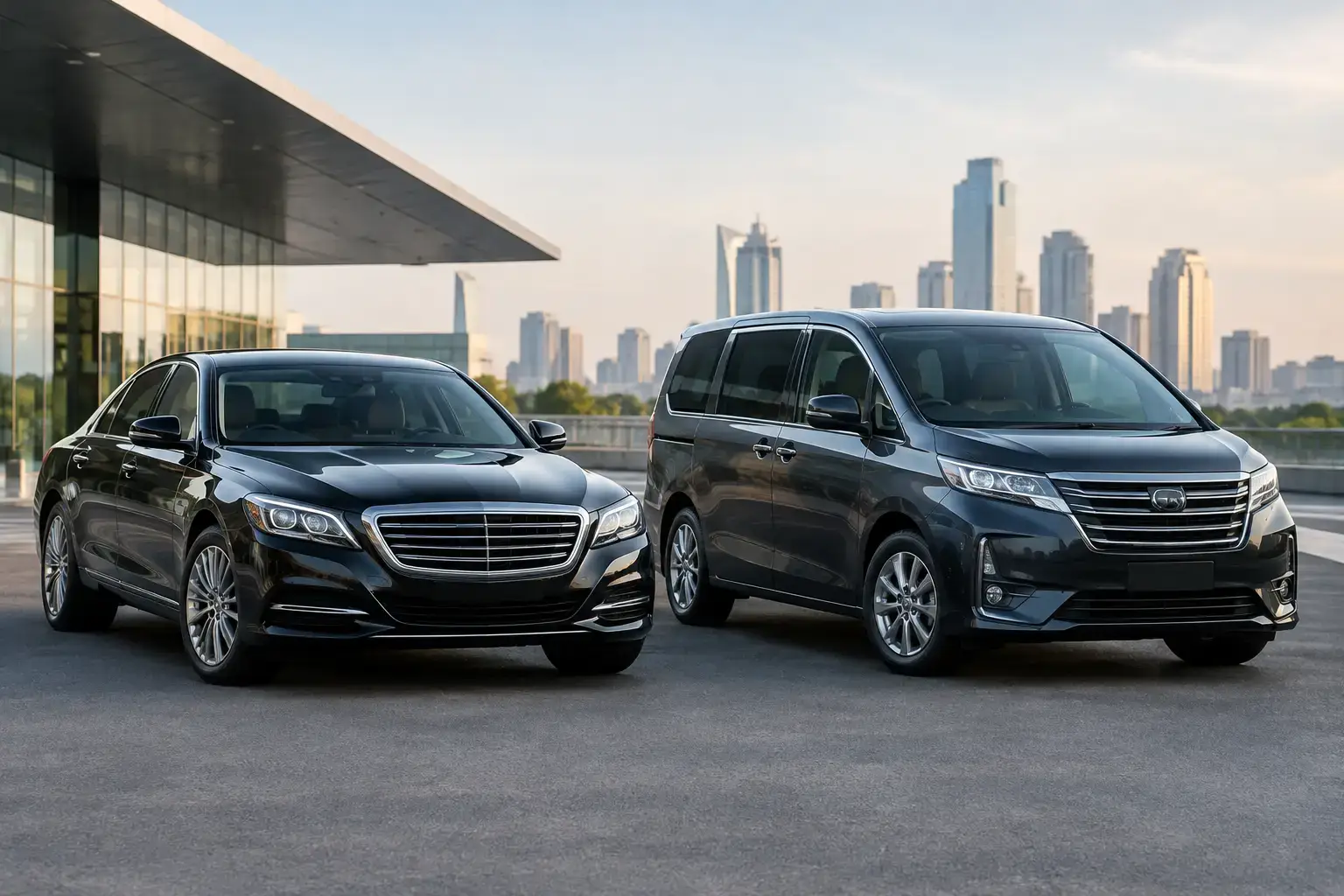
A sedan MPV comparison is rarely just a question of how many seats a vehicle has. For airport transfers, executive roadshows, and corporate guest movements in Singapore, the right choice affects arrival presentation, luggage handling, passenger comfort, and whether the schedule stays on track. A sedan may be the more discreet executive option for one or two travelers. A premium MPV can be the more practical choice when a delegation, family, or luggage-heavy itinerary is involved.
The correct vehicle should be selected around the actual movement requirement, not the lowest advertised capacity. Passenger count, baggage profile, flight schedule, hotel access, and the importance of the arrival all matter. For corporate coordinators, this decision also influences fleet allocation, dispatch planning, and the number of vehicles required across the program.
Sedan MPV Comparison: The Operational Difference
An executive sedan is designed for focused, high-touch travel. It suits a single VIP, a senior executive, or two business travelers who value a quiet cabin, polished presentation, and direct point-to-point movement. Sedans are particularly appropriate for airport arrivals with light luggage, financial district meetings, private dinners, and hourly chauffeur bookings where discretion is a priority.
A premium MPV is designed around flexibility. It provides a higher seating position, easier entry and exit, more usable cabin space, and substantially better tolerance for luggage. It is often the stronger choice for three or more travelers, travelers carrying full-size suitcases, families, colleagues traveling together, or guests who may need additional personal space during a longer transfer.
Neither category is automatically better. The sedan communicates executive simplicity. The MPV reduces operational risk when the party size or baggage count is less predictable.
Passenger Comfort Is More Than Seat Count
A sedan can technically accommodate multiple passengers, but comfort changes quickly once rear-seat space is shared. For a short city transfer, two rear passengers may be entirely suitable. For an airport journey after a long-haul flight, or a 90-minute movement between meetings, the same arrangement may feel restrictive.
Premium MPVs generally offer more shoulder room, headroom, and legroom across the cabin. They are also easier for travelers in business attire, older guests, and passengers carrying hand luggage or presentation materials. This matters when the vehicle is part of the guest experience, not simply a method of transport.
For senior leadership, a sedan remains a strong choice when one principal is traveling alone or with one colleague. For a visiting team of three or four, an MPV generally creates a more comfortable and composed arrival.
Luggage Capacity Is Usually the Deciding Factor
Airport transfers are where booking assumptions most often fail. A party of three may fit comfortably in a sedan, but three checked suitcases, cabin bags, and laptop cases can exceed practical trunk capacity. The result is an uncomfortable cabin, a need for an additional vehicle, or an avoidable delay at the pickup point.
For a sedan booking, consider one or two passengers with standard luggage as the most reliable use case. The exact capacity depends on the sedan model and the size of each case, so unusually large, hard-shell, sporting, exhibition, or excess baggage should be declared before confirmation.
A premium MPV is the safer allocation for travelers arriving with several large suitcases. It also works well for family airport transfers, cruise terminal transfers, and business groups carrying sample cases, event materials, or branded equipment. The extra space protects the quality of the ride and prevents last-minute changes to the transport plan.
When an Executive Sedan Is the Right Choice
Choose an executive sedan when the movement is centered on one principal, presentation, and privacy. It is well suited to a VIP airport transfer, a C-suite meeting schedule, a hotel-to-office movement, or an evening engagement where a refined vehicle profile is appropriate.
Sedans can also be effective for parallel executive movements. Rather than placing several senior guests in one larger vehicle, a coordinator may assign individual sedans to principals with separate schedules. This allows each itinerary to run independently and makes route changes easier to manage.
For hourly bookings, the sedan works best when the guest has a compact itinerary with short waits between appointments. Chauffeur routing can be planned around meeting locations, hotel pickup points, and likely traffic conditions, while the vehicle remains appropriately discreet outside offices, residences, and premium venues.
The trade-off is limited flexibility. If an executive is joined by additional colleagues, receives gifts or materials during the day, or departs with more luggage than they arrived with, the sedan can become less practical. When there is uncertainty, selecting an MPV from the outset is often more cost-effective than arranging a second vehicle later.
When a Premium MPV Is the Better Allocation
A premium MPV is typically the preferred option for airport groups, visiting delegations, and family travel. It keeps the party together, gives passengers room to settle in after a flight, and simplifies the arrival process for hosts and corporate representatives.
For MICE programs, an MPV can be especially useful for speakers, sponsors, production leads, or small management teams traveling between Changi Airport, hotels, conference venues, and dinner locations. These passengers often carry more than personal luggage. Garment bags, documents, equipment cases, and event credentials all take up space that a sedan may not accommodate comfortably.
MPVs also provide an advantage when the passenger list is fluid. If a meeting runs over and an additional colleague joins the transfer, the vehicle is more likely to handle the change without creating a separate dispatch issue. That flexibility is valuable for operations teams managing multiple arrivals across different flights.
The trade-off is vehicle profile. Some travelers prefer the lower, more traditional executive feel of a sedan, particularly for a solo VIP transfer. A premium MPV remains polished and suitable for executive travel, but its strongest value is practical space rather than a strictly formal sedan experience.
Planning Sedan and MPV Transfers for Corporate Programs
For a single airport pickup, the decision can be made from passenger and luggage details. For a conference, delegation, or multi-day corporate program, fleet selection should be planned as part of the overall transport schedule.
Start with arrival data: flight number, scheduled landing time, terminal, passenger names, mobile contact, luggage estimate, and final destination. Flight tracking helps dispatch teams adjust for early or delayed arrivals, but it does not solve an incorrect vehicle allocation. Accurate baggage information remains essential.
Next, separate passengers by service requirement rather than simply by headcount. Senior executives may require individual sedans. Small teams arriving on the same flight may be best assigned to premium MPVs. Larger groups should move into minibus or coach planning rather than being divided inefficiently among several MPVs.
This is also where routing matters. A group traveling from the airport to one hotel can share a vehicle efficiently. A group with separate hotel drop-offs, staggered meeting times, or different security requirements may require a mixed fleet. A structured plan can use sedans for principals, MPVs for accompanying staff, and larger vehicles for the wider delegation.
At Limo Z, complex requirements are handled through coordinated fleet planning rather than a one-size-fits-all vehicle recommendation. That includes dispatch review, early-arrival standards, licensed and insured vehicles, and chauffeur assignments appropriate to executive or event-facing service.
Questions to Confirm Before Booking
Before selecting a sedan or MPV, confirm the real number of passengers, not just the names on an itinerary. Ask whether anyone is traveling with checked bags, golf clubs, equipment, or display materials. Confirm whether the transfer includes one destination or several, and whether the travelers will be joined by a host, assistant, or local colleague.
For executive travel, also consider the purpose of the ride. A solo airport arrival for a board member may call for a sedan even if an MPV would offer more space. A three-person team heading directly to a client presentation may benefit more from arriving together in an MPV with their materials properly stowed.
The same principle applies to return departures. A sedan that worked for a light arrival may not be sufficient after a week of shopping, conference materials, or additional luggage. Reviewing the outbound transfer separately avoids a last-minute vehicle change.
Match the Vehicle to the Movement
The best sedan MPV comparison comes down to the movement itself. Choose a sedan when privacy, executive presentation, and a compact passenger load define the trip. Choose an MPV when space, luggage capacity, group continuity, or itinerary flexibility matter more.
For high-stakes travel, leave room in the plan for the realities of the journey: a delayed flight, an additional suitcase, a colleague added to the transfer, or a meeting that changes location. A properly matched vehicle gives passengers a calm start or finish to the day, while giving the operations team fewer variables to manage.