
Sedan vs MPV Transfer for Executive Travel
17 August 2026
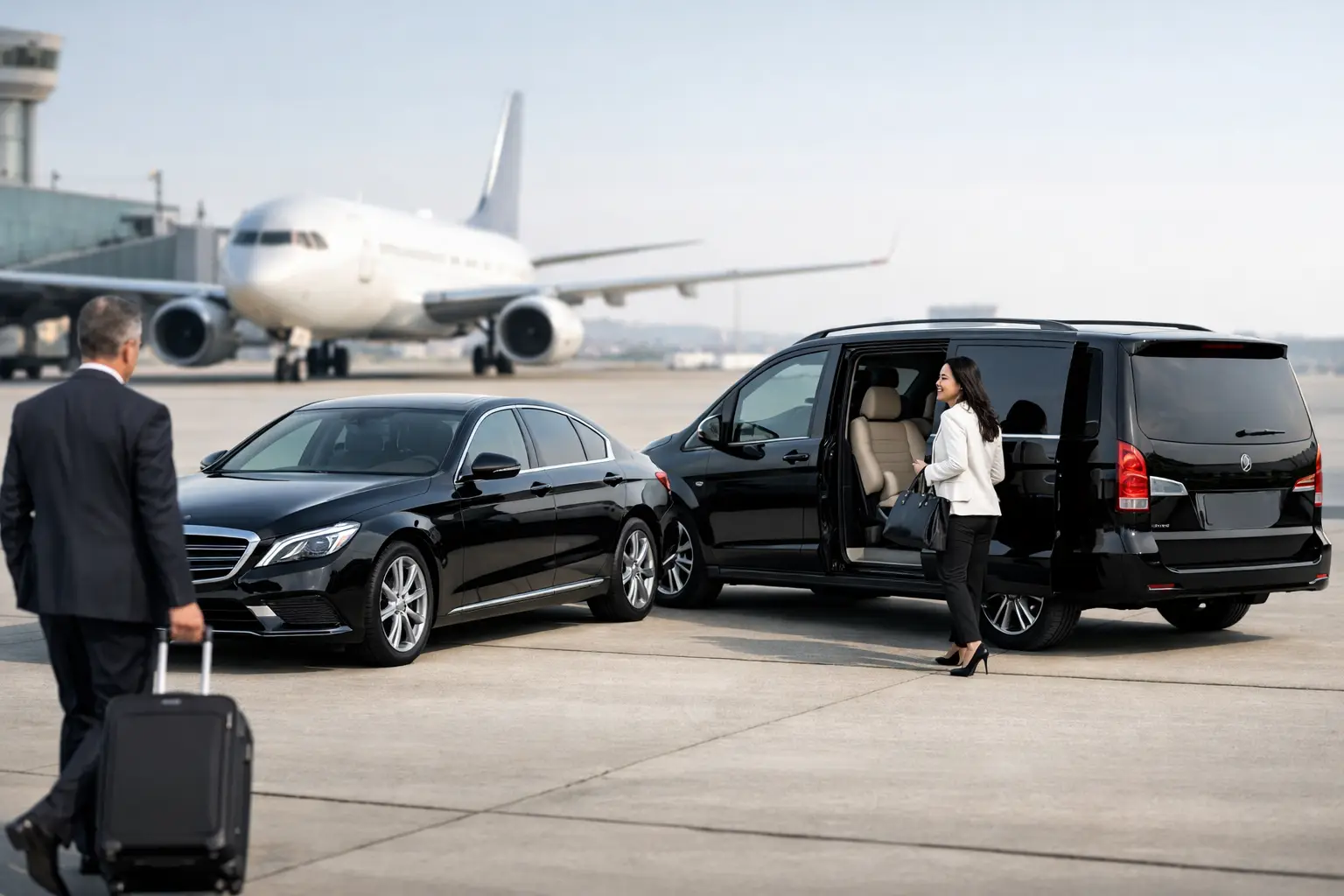
A sedan vs MPV transfer decision is usually made at the curb, when luggage will not fit, a guest needs more room, or a compact vehicle arrives for a party that is not actually compact. For airport pickups, executive meetings, and VIP itineraries in Singapore, the right vehicle is not simply a matter of preference. It affects comfort, presentation, boarding time, and the reliability of the wider schedule.
A sedan is often the most appropriate choice for one or two executive travelers. An MPV becomes the stronger operational choice when passenger count, baggage volume, family needs, or back-to-back movements create less room for assumptions. The best selection starts with the journey itself, not the vehicle category.
Sedan vs MPV Transfer: The Core Difference
A premium sedan is designed around discretion and an executive travel experience. It presents well at hotels, offices, private residences, and corporate venues while providing a quiet, focused environment for an individual guest or a small party. For a senior executive traveling alone, a couple arriving for a business stay, or two colleagues attending the same meeting, a sedan offers an efficient balance of comfort and formality.
A premium MPV prioritizes usable space without stepping away from a chauffeur-driven standard. It gives passengers easier access, a more flexible cabin layout, and substantially better capacity for luggage or carry-on equipment. That matters when travelers arrive with multiple suitcases, golf bags, presentation cases, strollers, or shopping bags after a long-haul flight.
Neither category is universally better. A sedan is often the more refined answer for a single VIP. An MPV is often the lower-risk answer for a group whose luggage count may change at the airport.
When a Sedan Is the Better Transfer Choice
Choose a sedan when the trip is centered on executive presentation, privacy, and a light luggage load. It is particularly well suited to point-to-point city transfers, departures from central business district hotels, and airport transfers for one or two passengers traveling with typical business luggage.
For executive visitors, the sedan cabin can also create useful separation between work and arrival. A traveler can take a call, review a meeting brief, or simply rest before reaching the next appointment. The lower profile of a sedan is an advantage at formal venues where a discreet arrival matters more than maximum cabin capacity.
Sedans also make sense for separate VIP movements. If two principals are arriving on different flights or following different schedules, assigning each traveler an individual sedan may be more effective than holding a larger vehicle for a shared movement. It protects the itinerary from delay and gives each guest a direct, dedicated transfer.
The limitation is straightforward: luggage space is finite. Two passengers may fit comfortably, but the same party with large checked bags, cabin cases, and additional items can quickly exceed practical capacity. A sedan should not be selected based only on the number of seats.
Strong sedan use cases
A sedan is typically the right fit for a solo airport arrival, a two-person executive transfer, a hotel-to-meeting journey, an evening dinner transfer, or hourly chauffeur service for a principal moving between appointments. It is also a practical option for corporate travel teams booking multiple individual transfers across staggered schedules.
When an MPV Is the Better Transfer Choice
An MPV is the preferred option when the transfer must accommodate more people, more luggage, or more variables. A family of four may physically fit in a sedan, but after adding four checked bags, backpacks, and a stroller, the vehicle choice becomes operationally unsuitable. The same applies to three business travelers arriving with luggage for a multi-day conference.
For airport arrivals, the MPV provides valuable contingency space. Flight schedules, baggage collection times, and traveler requirements are not always precise. Guests may arrive with extra bags, carry samples for a trade event, or be joined by a colleague on the same flight. An MPV reduces the chance that a transfer plan needs to be adjusted at the last minute.
The MPV is also better for travelers who value easier entry and exit. This can be particularly relevant for older passengers, families with young children, guests in formal attire, or travelers who need a less restrictive cabin. The additional room supports a more relaxed transfer after a long flight.
For corporate groups, an MPV can reduce vehicle count when a small delegation is moving together. Instead of coordinating two sedans, one correctly sized MPV may simplify the pickup point, loading process, chauffeur communication, and arrival sequence. However, this only works when the passenger and luggage plan has been confirmed realistically.
Strong MPV use cases
An MPV is well suited to airport transfers for three to six passengers, family travel, small delegations, guests traveling with substantial luggage, and event teams carrying materials between venues. It also works well for a day of meetings where passengers may be collected from different locations and require space for personal items throughout the itinerary.
Luggage Should Decide More Than Passenger Count
The most common booking error is treating every passenger as if they have one small suitcase. For airport transfers, luggage is often the deciding factor between a sedan and an MPV. A party of two with two large suitcases and two cabin bags may be appropriate for an MPV, while three colleagues with only briefcases may be comfortable in a sedan only if vehicle capacity permits and presentation is the priority.
Ask for the actual baggage profile before confirming a vehicle. Consider large suitcases, carry-ons, garment bags, strollers, mobility aids, golf clubs, trade samples, and any equipment needed immediately after arrival. A transfer that looks efficient on paper can become delayed if the chauffeur must arrange a second vehicle at the airport.
For corporate travel coordinators, this detail is especially useful for international delegations. Long-haul travelers commonly carry more baggage than guests on short regional routes. If attendees are continuing directly to a conference, hotel, cruise terminal, or private residence, building in luggage capacity protects the entire handover.
Consider the Full Itinerary, Not Just the Pickup
A vehicle should suit every stage of the assignment. A sedan may be ideal for a single Changi Airport pickup, but an MPV may be more practical if the guest will collect colleagues later, stop at a hotel, carry event materials, and continue to a dinner venue. Similarly, an MPV may be perfect for arrival day but unnecessary for a principal's individual meetings on subsequent days.
This is where a split-fleet plan can be more efficient than using one category for every movement. An event organizer might deploy MPVs for airport arrivals, then sedans for executive appointments and minibuses for larger delegate groups. Each vehicle has a defined role, which improves routing and prevents overbooking or underutilization.
For multi-stop programs, the itinerary should include pickup times, flight details, passenger names, contact procedures, luggage expectations, venue access points, and any waiting requirements. A disciplined dispatch review can identify whether a sedan or MPV is likely to perform better before the first vehicle is assigned.
Presentation, Privacy, and Guest Expectations
Vehicle selection sends a message. A luxury sedan usually communicates formal executive hospitality, particularly for board members, speakers, investors, diplomatic guests, and senior leadership. Its appeal is not just the cabin. It is the controlled, discreet experience from pickup to arrival.
An MPV communicates a different form of hospitality: thoughtful accommodation. It tells a family, visiting delegation, or group of colleagues that their comfort and belongings have been considered. For many travelers, that is more valuable than arriving in a smaller vehicle with a more traditional executive profile.
The right choice depends on what the guest will notice. A senior executive traveling alone may value quiet and privacy. A family arriving after an overnight flight will likely value cabin room, easy access, and confidence that every bag fits. A conference organizer may value the ability to move a complete team in one coordinated vehicle.
Booking the Right Vehicle With Fewer Assumptions
When arranging a transfer, provide the passenger count, flight number or pickup time, full luggage estimate, destination, and any special requirements. For executive or event travel, also confirm whether passengers are traveling together, whether the vehicle will wait, and whether the itinerary includes multiple stops.
Limo Z applies this operational detail across individual chauffeur bookings and larger transport programs. A clear brief allows dispatch to match the appropriate fleet category, monitor flight timing where required, and coordinate vehicle deployment around the actual movement plan rather than a generic booking label.
If the trip is simple and light, a sedan can deliver exactly the right level of executive service. If the trip includes a group, larger baggage volume, or any uncertainty around space, select the MPV before the vehicle reaches the pickup point. A little extra capacity is usually far less noticeable than a transfer plan that runs out of room.