
Airport Train Versus Private Transfer: Which Fits?
24 October 2026
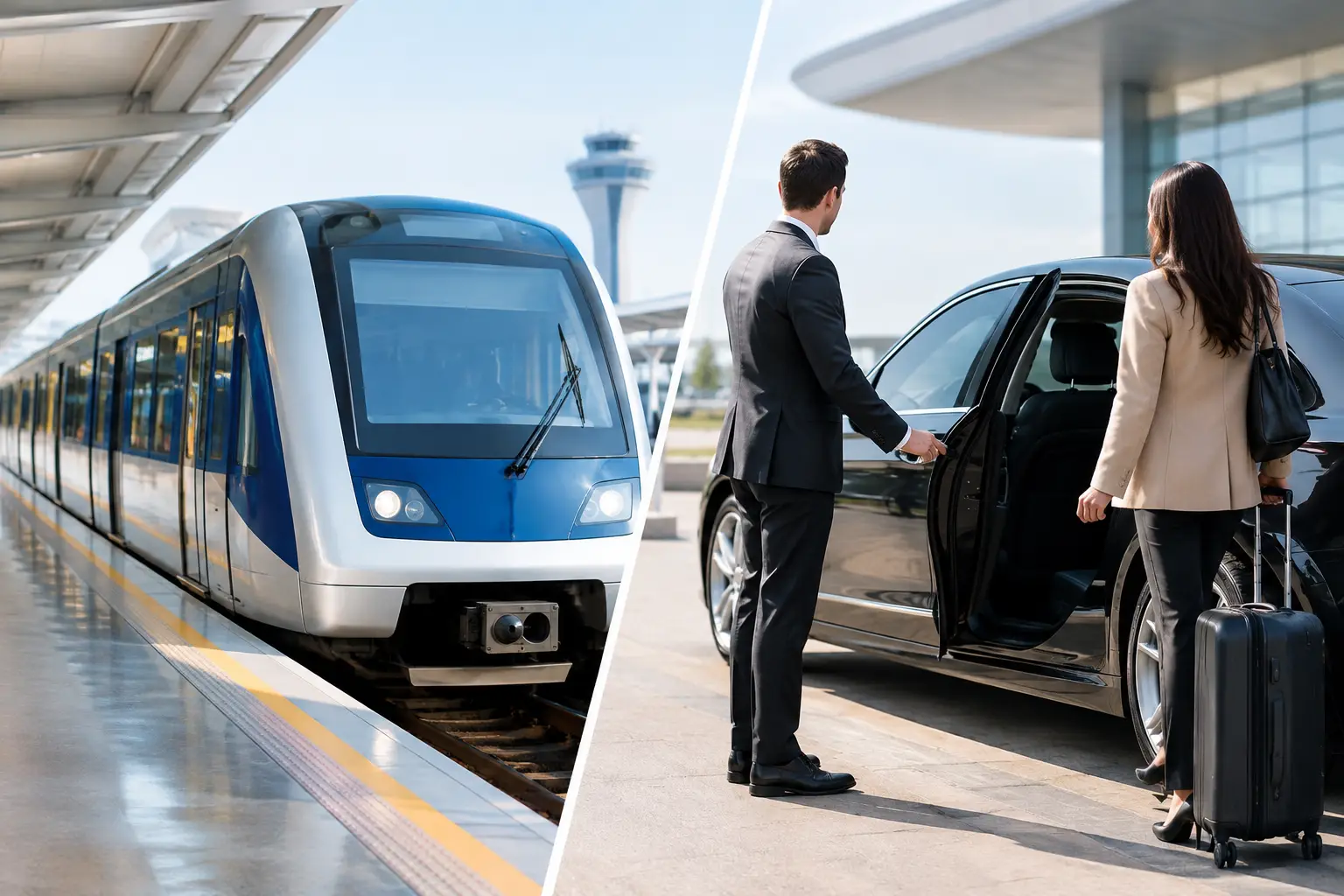
A flight can land exactly on schedule and still leave the arrival experience to chance. That is the practical difference behind the airport train versus private transfer decision in Singapore. Both options are efficient in the right circumstances, but they solve very different travel requirements - especially when luggage, meeting times, seniority, or group coordination are involved.
For a solo traveler staying near an MRT station with a light bag and a flexible schedule, the train is often a sensible choice. For an executive arriving after a long-haul flight, a family managing multiple suitcases, or a corporate team moving on a fixed itinerary, a pre-arranged chauffeur transfer offers a different level of control.
Airport Train Versus Private Transfer: The Real Trade-Off
The airport train is built for network access. From Changi Airport, travelers can connect to Singapore's MRT system and reach many business districts, hotels, and residential areas at a low fare. It is predictable during normal operating hours, avoids road congestion, and works well for travelers who are comfortable navigating station connections.
A private transfer is built around the passenger's itinerary rather than the public transport network. A chauffeur meets the traveler at the designated arrival point, assists with luggage, and proceeds directly to the requested address. The vehicle, pickup timing, passenger manifest, and routing can be arranged before the flight departs.
Neither is automatically better. The decision comes down to whether the priority is lowest transport cost or managed arrival logistics. For executive and VIP travel, that distinction is rarely minor. A delayed connection, a change of terminal, or a guest unfamiliar with Singapore can turn a low-cost journey into an unnecessary operational task for someone else to solve.
Cost: Compare More Than the Fare
The train has the clear advantage on headline price. It is one of the most economical ways to travel from the airport, particularly for one person carrying a small amount of luggage. If the destination is close to an MRT station and there is no time-sensitive appointment, the value is difficult to dispute.
Private transfers cost more because the service includes a dedicated vehicle and chauffeur, but the price reflects more than a ride. For a scheduled airport pickup, the operating model may include flight monitoring, dispatch review, a planned vehicle allocation, waiting arrangements, and a direct journey to the final destination. These details matter when the traveler cannot afford to spend time finding the correct platform, changing lines, or arranging a last-minute alternative.
The comparison also shifts for small groups. Four colleagues taking the train may each pay a modest fare, but they must travel together through the airport, fit into the same train flow, and manage luggage at station entrances and exits. An MPV transfer can keep the group, baggage, and itinerary in one controlled movement. For a family, delegation, or executive team, the per-person difference may be more reasonable than it first appears.
Timing and Reliability Depend on the Itinerary
Singapore's MRT system is known for reliability, but it operates to a public timetable. Travelers arriving very late, departing before the first service, or landing after a significant flight delay may find that train availability does not match their schedule. Even when the service is running, the trip time is not only the train ride. It includes walking through the terminal, locating the station, waiting for service, making transfers, and walking from the final station to the hotel or office.
A private transfer is scheduled around the flight and destination. For airport service, the key question is not simply when the plane is expected to land, but when the passenger is likely to clear immigration, collect baggage, and be ready to depart. A professionally managed service accounts for this arrival sequence and assigns a chauffeur and vehicle accordingly.
Road traffic can affect a private transfer, of course. The benefit is that the route can be assessed in real time, and the passenger remains in a private, air-conditioned vehicle rather than managing an alternative route with bags in hand. For a traveler going directly to Marina Bay, the CBD, Sentosa, or a meeting venue, a door-to-door transfer also removes the final-mile uncertainty that train travel can create.
When a Fixed Meeting Time Changes the Answer
If a visitor must be at a board meeting, site visit, conference registration, or hotel briefing shortly after landing, the transport choice becomes part of the day's risk management. The train may still work, but it leaves more variables with the traveler. A private chauffeur allows the host, executive assistant, or event coordinator to confirm the movement in advance and focus on the meeting itself.
This is especially relevant for first-time visitors, senior executives, speakers, and diplomatic guests. The standard is not merely arriving eventually. It is arriving composed, on time, and without asking the receiving team to troubleshoot transportation.
Luggage, Privacy, and Presentation
The airport train is most convenient when luggage is simple. A backpack, carry-on, or compact case is manageable. Large checked bags, presentation materials, samples, strollers, golf equipment, or several suitcases add friction quickly. Elevators, ticket gates, platform gaps, and transfers are all manageable, but they require effort after a flight.
A private transfer keeps luggage in the vehicle from pickup to drop-off. The correct vehicle category matters here. An executive sedan may suit one or two passengers with standard luggage, while a premium MPV offers more space for additional bags and family travel. Larger delegations may require a minibus or coach, with capacity planned against both passenger count and baggage volume.
Privacy is another practical consideration. Public transport is public by design. For many travelers, that is perfectly acceptable. But executives reviewing documents, taking confidential calls, or simply needing a quiet transition after a long flight may prefer a discreet vehicle environment. A chauffeur service also provides a more appropriate arrival experience when a company is receiving a client, investor, board member, or VIP guest.
The Group Travel Question: One Journey or Many?
For event organizers and corporate operations teams, the airport train versus private transfer comparison should not be made passenger by passenger. It should be made against the full movement plan.
A conference delegation arriving on several flights may need different vehicle sizes, timed airport pickups, hotel drop-offs, and onward transfers to a venue. Sending each attendee independently to the MRT can reduce direct spend, but it provides limited visibility over who has arrived, who is delayed, and whether guests reach the hotel as planned. It can also be unsuitable for guests traveling with event materials or unfamiliar with the city.
Private transport allows those movements to be structured. Dispatch can work from flight details and passenger manifests, while vehicle allocation can be matched to each arrival wave. For larger programs, organizers can separate VIP transfers from general attendee movements and coordinate minibuses or coaches for scheduled group departures.
That does not mean every attendee needs a private car. A sensible plan may use chauffeur transfers for senior guests and late-night arrivals, then use shared vehicles for groups with aligned schedules. The right answer is often a mixed transport program rather than a single rule for everyone.
Questions to Ask Before You Decide
Start with the arrival conditions. Is the flight landing during MRT operating hours? Is the traveler comfortable using the network? Is the destination a short walk from a station? If the answer is yes across all three, the train is likely a practical option.
Then consider the service requirements. Is there a fixed appointment within a narrow window? Will the traveler have substantial luggage? Are they arriving with children, colleagues, or clients? Does the company need confirmation that a VIP has been collected and delivered? These are the situations where a private transfer earns its place.
For corporate planners, add coordination to the assessment. A single executive transfer can be booked as a defined movement. A multi-flight delegation, staff shuttle, or MICE program requires vehicle scheduling, route planning, passenger communication, and contingency capacity. That is a transport operations requirement, not simply a collection of rides.
Choosing the Right Private Vehicle
The vehicle should reflect the journey, not just the passenger count. An executive sedan suits a straightforward business arrival where presentation and comfort matter. A luxury sedan may be appropriate for VIP or protocol-sensitive travel. Premium MPVs are often the practical choice for families, small executive teams, or travelers carrying multiple large cases.
For groups, capacity needs to be calculated carefully. A vehicle that seats eight passengers may not accommodate eight passengers with full-size luggage. For airport movements, baggage is usually the constraint that determines whether a minibus, mini coach, or full-size coach is required. Clear flight details and luggage expectations allow the transport plan to be designed correctly from the start.
Limo Z approaches these movements with the same discipline whether the requirement is one executive airport pickup or a coordinated arrival program. The goal is a vehicle plan that protects timing, passenger comfort, and the receiving team's schedule.
The best choice is the one that fits the stakes of the arrival. Take the train when the trip is light, flexible, and station-friendly. Arrange a private transfer when the journey needs to be direct, discreet, and accounted for before the aircraft touches down.