
Conference Transport Example for Singapore Events
5 November 2026
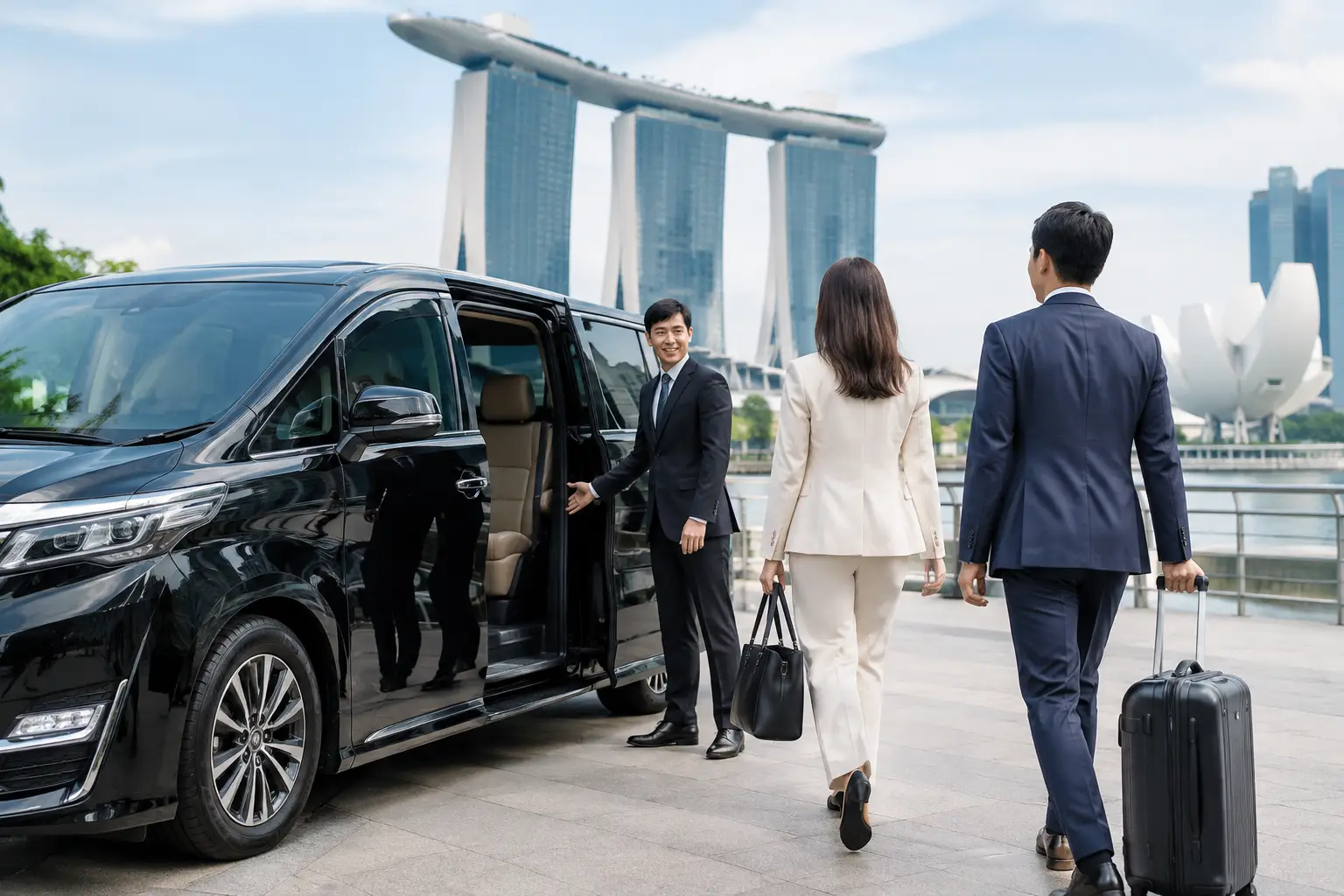
A conference transport example is most useful when it reflects the pressure points that event teams actually face: international arrivals landing at different times, senior delegates requiring discreet transfers, and hundreds of attendees needing to reach the venue before the first session begins. In Singapore, where timing, venue access, and premium presentation matter, transport should be planned as an operating system rather than a collection of vehicle bookings.
The following scenario shows how a structured transport program can work for a three-day regional conference. It is designed for event planners, corporate administrators, and operations teams who need clear movement plans, dependable dispatch control, and an appropriate guest experience from arrival through departure.
Conference Transport Example: A Three-Day Executive Event
Assume a technology company is hosting a 450-person conference at a central Singapore hotel. Attendees are staying across three nearby hotels, while 18 C-suite leaders, speakers, and overseas partners require individual airport and hotel transfers. The program includes a welcome dinner, two full conference days, breakout visits at an off-site location, and staggered departures on the final day.
The transport requirement is not one service. It is four connected workstreams: VIP movements, airport coordination, attendee shuttles, and event-specific transfers. Each requires a different vehicle category, manifest process, and dispatch approach.
For the executive group, the organizer assigns luxury sedans and premium MPVs based on passenger count, luggage, protocol requirements, and security expectations. A solo speaker with a late-night arrival may be best served by a discreet executive sedan, while a delegation of four traveling with presentation materials may need a premium MPV. Flight tracking allows the dispatcher to adjust the chauffeur's arrival time if a flight is delayed, while early-arrival standards reduce the risk of a guest waiting at the terminal.
For general attendees, the priority changes from privacy to predictable volume movement. Minibuses, mini coaches, and full-size coaches are assigned to fixed hotel pickup points, with departure windows tied to registration opening times and the conference agenda.
Start With the Movement Schedule, Not the Fleet
A common planning error is choosing vehicles before the event team has mapped who needs to move, where they need to go, and when they must arrive. Fleet selection should be the result of the schedule, not the starting point.
For this event, the transport planner first separates travelers into movement groups. VIPs and speakers receive individual itineraries. General attendees are grouped by hotel. Staff, production crews, and event vendors receive a separate service plan because their reporting times are earlier and their departure times are less predictable.
The first conference morning may look like this:
- 6:30 a.m.: Production crew coach transfer to the venue.
- 7:00 a.m.: First attendee shuttle departures from all three hotels.
- 7:30 a.m.: Second attendee shuttle departures for later arrivals.
- 8:00 a.m.: VIP hotel transfers begin, timed to private briefings and speaker preparation.
- 8:30 a.m.: Final attendee shuttle wave arrives before the opening session.
This schedule gives dispatch a usable framework. It also reveals whether the requested arrival time is realistic. If registration begins at 8:00 a.m. but every guest is scheduled to arrive at 7:55 a.m., the result will be congestion at the hotel driveway and venue drop-off point. Staggering departures by hotel and attendee group is often more effective than adding vehicles.
Fleet Sizing Depends on Peak Demand
Vehicle capacity is only one part of fleet sizing. The more important question is how many passengers must move within the same 20- to 30-minute period. A 450-person event does not always require transport for 450 people at once. Some guests may walk from nearby hotels, arrive independently, or travel with colleagues.
In this example, assume 270 attendees need shuttle service each morning. The planner expects 70 percent to use the first two departure waves, with the rest traveling later. A practical configuration could include a mix of full-size coaches for the largest hotel, mini coaches for medium-volume pickup points, and minibuses for smaller hotels or overflow movements.
The correct mix depends on loading space, road access, and turnaround time. A full-size coach may be efficient for a large hotel, but it is not always suitable for a narrow driveway or a venue with restricted loading bays. A smaller vehicle may cost more per passenger but provide better timing control where access is constrained.
The event team should also account for luggage. Airport arrivals, hotel changes, and transfers to an off-site destination can significantly reduce usable passenger capacity. A vehicle that works well for seated conference guests may not be suitable for the same group traveling with suitcases, display materials, or equipment cases.
Build Separate Protocol for VIP and Speaker Transfers
Senior guests should not be placed into the same operating model as general attendee shuttles. VIP transfer planning requires named manifests, confirmed contact details, arrival instructions, and a defined escalation process if a guest cannot be located.
For airport transfers, the chauffeur should receive the flight number, terminal, arrival time, passenger name, luggage estimate, and destination. The event coordinator should know who is monitoring flight changes and who can approve last-minute vehicle adjustments. This matters when an executive arrives early, misses a connection, or brings additional colleagues without prior notice.
For speaker transfers, the itinerary should reflect the event program rather than a standard hotel-to-venue journey. A keynote speaker may need to arrive 45 minutes before the session for audiovisual checks. Another may require a return transfer immediately after appearing on stage. Where schedules are sensitive, a dedicated vehicle and chauffeur can provide better control than sharing resources across the speaker group.
Limo Z typically treats these movements as individually managed executive travel, supported by dispatch review and chauffeur briefings. This is particularly valuable for diplomatic guests, board members, and overseas delegations where presentation and discretion are part of the event requirement.
Plan the Off-Site Transfer Like a Mini Event
On day two, the 450 attendees travel to an off-site innovation center for afternoon breakout sessions. This is where many conference plans fail. The transfer looks simple on paper, but it introduces new variables: venue loading capacity, traffic conditions, staggered program endings, accessibility needs, and the risk of guests boarding the wrong vehicle.
A clear boarding plan prevents confusion. Coaches should be numbered, assigned to defined hotel or attendee groups, and positioned in a sequence that supports safe loading. Event staff should be stationed at the pickup area with the latest manifest and direct contact with dispatch. If the off-site venue has limited coach parking, vehicles may need to operate on timed arrivals rather than wait on site.
The return movement should not assume every guest leaves at the same time. Some attendees may depart early for flights, while speakers and clients may remain for private meetings. The transport plan should include a core return wave, a later return wave, and reserved executive vehicles for exceptions. This layered approach avoids holding an entire coach for a small number of late passengers.
Dispatch Control Is the Difference Between Booked and Managed
A vehicle booking confirms supply. Transport management controls what happens when conditions change.
For a conference, the operations desk should maintain a live master schedule covering vehicle assignments, chauffeur contacts, guest manifests, pickup times, route notes, venue access instructions, and backup resources. Senior dispatch review is especially useful before the first day, when the planner can identify conflicting movements, unrealistic turnaround times, or duplicate requests.
A workable contingency plan covers the situations most likely to occur: delayed flights, missing passengers, traffic disruption, unexpected luggage volume, vehicle access restrictions, and last-minute VIP additions. Not every event needs a large reserve fleet on standby. However, high-stakes programs should have a defined response option, whether that is a backup sedan, an additional minibus, or a dispatcher authorized to redeploy a vehicle.
Communication must be controlled as well. Guests should receive concise pickup instructions, not operational detail. Event staff need a separate contact channel for changes and escalations. Chauffeurs need accurate instructions before reaching the pickup point, especially where hotel entrances, ballroom loading zones, or airport meeting locations are not straightforward.
What to Include in a Transport Quote Request
A precise brief helps a transport partner return a realistic proposal quickly. Provide the event dates, venues, hotel list, expected passenger counts, daily schedules, airport movement estimates, VIP requirements, luggage assumptions, and any accessibility considerations. It is also useful to state whether branding, signage, onboard coordination, or bilingual chauffeur support is required.
If the attendee count is still changing, provide a working estimate and identify the date when numbers will be finalized. This allows the operator to reserve an appropriate fleet range while making clear which elements remain subject to revision. For larger programs, a site review or venue access check may be appropriate before confirming the routing plan.
The best conference transport plan is rarely the one with the most vehicles. It is the one where every traveler has a clear journey, every vehicle has a defined purpose, and the event team knows exactly who will respond when the schedule changes.