
How to Choose an Executive MPV for Business Travel
19 November 2026
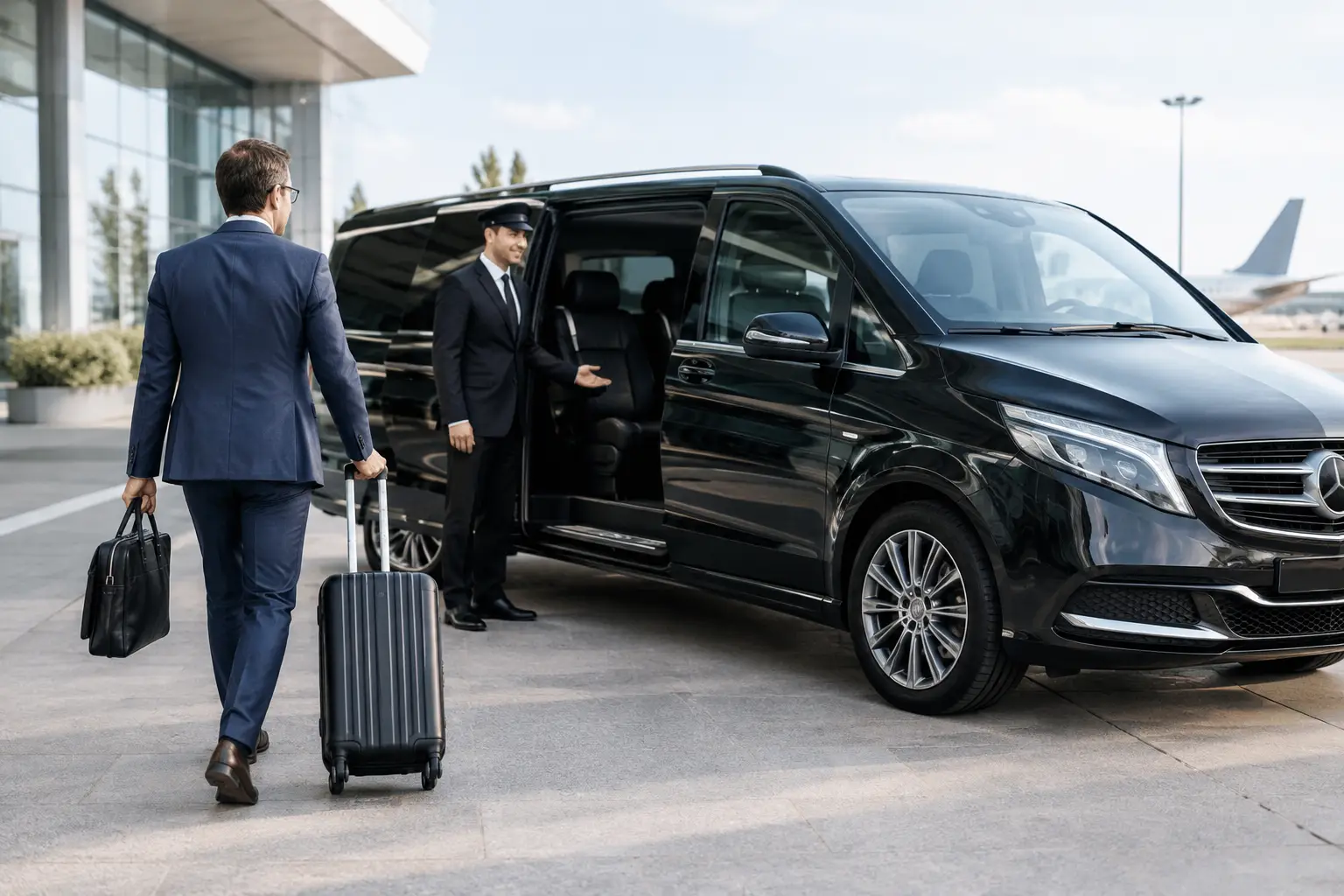
A senior executive arriving at Changi with two colleagues, four suitcases, and a tightly timed meeting schedule does not need the largest vehicle on the road. They need the right one: comfortable enough for a discreet VIP transfer, correctly sized for their luggage, and backed by a chauffeur operation that will still be in control if a flight lands early or the itinerary changes.
Knowing how to choose executive mpv service starts with the journey rather than the vehicle name. An executive MPV should provide more room and flexibility than a sedan without making the passenger experience feel like group transport. The decision comes down to passenger count, luggage, trip profile, presentation standards, and the operating discipline behind the booking.
Start With the Actual Passenger and Luggage Load
An executive MPV is commonly selected for two to six passengers, but seating capacity alone is a poor planning measure. A vehicle may legally accommodate several travelers while offering limited room for full-size luggage, garment bags, presentation materials, golf equipment, or carry-ons that passengers expect to keep close.
For an airport transfer, map the load before confirming the vehicle. Record the number of passengers, adults and children where relevant, and the expected number of large, medium, and cabin-size bags. Ask whether travelers are carrying product samples, exhibition materials, or oversized items. These details determine whether a premium MPV is appropriate or whether a minibus is the more professional choice.
A useful rule is to plan for comfort, not maximum occupancy. Three executives with three large checked bags will generally travel more comfortably in a premium MPV than five travelers with the same baggage. For a delegation, placing too many people and bags into one vehicle can turn an otherwise polished arrival into a cramped first impression.
Consider the Seating Configuration
Not all executive MPVs offer the same cabin layout. Some prioritize second-row captain's chairs and a more private experience for one or two VIPs. Others provide a practical three-row layout for corporate teams. If a principal passenger requires easy entry, extra legroom, or a quiet working environment, their position in the vehicle matters as much as the total number of seats.
For a high-profile guest, ask whether the chauffeur can reserve the preferred second-row seat and assist with doors and luggage at each stop. For several colleagues traveling together, confirm that everyone can enter and exit without disrupting the itinerary. These small operational details matter during hotel drop-offs, conference arrivals, and back-to-back meetings.
Match the MPV to the Type of Executive Journey
The right executive MPV for a single airport arrival may not be right for a full-day roadshow. Begin by defining the service type: airport transfer, point-to-point city transfer, hourly chauffeur booking, or multi-stop corporate itinerary.
Airport transfers require timing control. The transport provider should collect the flight number, arrival terminal, passenger contact details, destination, and luggage profile. Flight tracking and dispatcher oversight are especially valuable because international arrivals can be early, delayed, or held at immigration. A chauffeur who arrives early and has clear instructions reduces the need for the traveler or corporate host to manage ground transportation after landing.
For hourly bookings, assess the route and waiting periods. An MPV works well for executive teams moving between offices, hotels, investor meetings, and dining appointments, particularly when passengers may leave items in the vehicle between stops. However, an itinerary with long-distance travel, frequent venue changes, or multiple parallel groups may require a coordinated fleet plan instead of one vehicle.
For conferences and MICE programs, avoid treating an executive MPV as a substitute for organized group transport. It is often ideal for speakers, VIPs, board members, and senior sponsors while minibuses or coaches handle delegates and staff. Separating these movements gives planners better arrival control and preserves the appropriate level of hospitality for each traveler group.
Check the Chauffeur Standard, Not Just the Vehicle Photos
Vehicle images can indicate cabin style, but they do not show how the service will perform at 6:00 a.m., during a rainstorm, or when a meeting ends 40 minutes late. Executive travel depends on the chauffeur and the dispatch operation supporting them.
Look for chauffeurs trained for executive and diplomatic service. They should be professionally presented, familiar with major hotels, business districts, event venues, and airport procedures, and able to communicate clearly without becoming intrusive. Discretion is essential. A good chauffeur confirms the passenger, assists with luggage, and remains attentive to timing without filling the journey with unnecessary conversation.
Operational credentials deserve equal attention. Confirm that vehicles are properly licensed and commercially insured for passenger transport. Ask how bookings are reviewed, how chauffeurs receive live itinerary updates, and who monitors the trip outside standard office hours. For a corporate booking, there should be a clear point of contact if a flight, venue, or passenger list changes.
Choose Comfort Features That Serve the Trip
Premium does not mean selecting every available feature. It means choosing the details that support the passenger's purpose. For an executive airport transfer, climate control, clean upholstery, bottled water where requested, charging access, and generous legroom can make a real difference after a long flight. For a short city transfer, the priority may be punctual pickup and efficient door-to-door routing.
Privacy glass can be useful for VIPs and confidential discussions, but it should not compromise passenger comfort or visibility. Wi-Fi may be valuable for an executive traveling between meetings, although mobile connectivity in Singapore is generally reliable and some travelers prefer their own secure hotspot. If confidentiality is critical, the more meaningful question is whether the chauffeur and operator understand privacy protocols.
Accessibility can also shape the decision. Travelers with limited mobility may need a lower step-in height, space for a folding wheelchair, or additional boarding assistance. This should be raised during booking, not assumed from the MPV category alone.
Review Timing, Routing, and Waiting Time in Advance
Singapore is compact, but corporate movement still requires planning. Peak-hour traffic, road closures, event congestion, weather, border procedures for cross-border travel, and hotel driveway access can affect the schedule. A dependable operator builds reasonable transfer time into the itinerary and uses current routing information rather than relying on a generic travel estimate.
Provide every stop in the correct order, including private residences, building names, terminal details, meeting rooms when relevant, and the desired arrival time. There is a difference between a 9:00 a.m. pickup and a 9:00 a.m. meeting arrival. If the passenger must be seated and prepared by 9:00, the chauffeur needs a route plan that accounts for drop-off access, elevator time, security screening, and a margin for traffic.
Also clarify waiting time. Airport meet-and-greet service, a chauffeur holding outside a meeting, and a vehicle parked during a two-hour event are different operating requirements. Clear terms prevent avoidable confusion and allow dispatch to assign the vehicle correctly.
Compare Quotes on Scope, Not the Lowest Rate
When reviewing executive MPV quotes, compare what is included. A low base rate may exclude airport parking, meet-and-greet, tolls, waiting time, late-night service, extra stops, or changes to the itinerary. A higher quote may include the dispatch coverage and service controls that protect an executive schedule.
For recurring corporate travel, request a consistent booking format. This should capture traveler names, mobile contacts, flight details, pickup instructions, cost center or reference number, and billing requirements. Standardized information reduces last-minute errors and makes monthly reconciliation easier for administrative teams.
For complex movements, a manually scoped quotation is usually better than trying to force every requirement into a fixed online booking. This is particularly true when several executive MPVs must work alongside sedans, minibuses, or coaches. Fleet coordination, staging locations, chauffeur briefing, and contingency vehicles should be planned as one operation.
When an Executive MPV Is Not the Best Choice
An MPV is a strong option when a small party needs space, comfort, and a premium arrival. It is not automatically the best answer for every trip. A solo executive with light luggage may prefer a luxury sedan for a more private experience. A group of seven with airport baggage may need a minibus, even if the group technically fits in a large MPV.
Likewise, if travelers are arriving on several flights, separate vehicles scheduled to each flight may be more reliable than having one MPV wait for the final arrival. The right solution is the one that protects the itinerary, not the one that appears simplest on a spreadsheet.
Limo Z approaches executive MPV planning as both a hospitality and transport-control decision: the passenger experience must feel calm, while the routing, timing, and communication behind it remain tightly managed.
A well-chosen executive MPV should disappear into the background of a successful business day. Passengers step out composed, on time, and ready for the meeting ahead - which is exactly what premium ground transportation is meant to achieve.