
Best Transport Options for Conferences in Singapore
28 October 2026
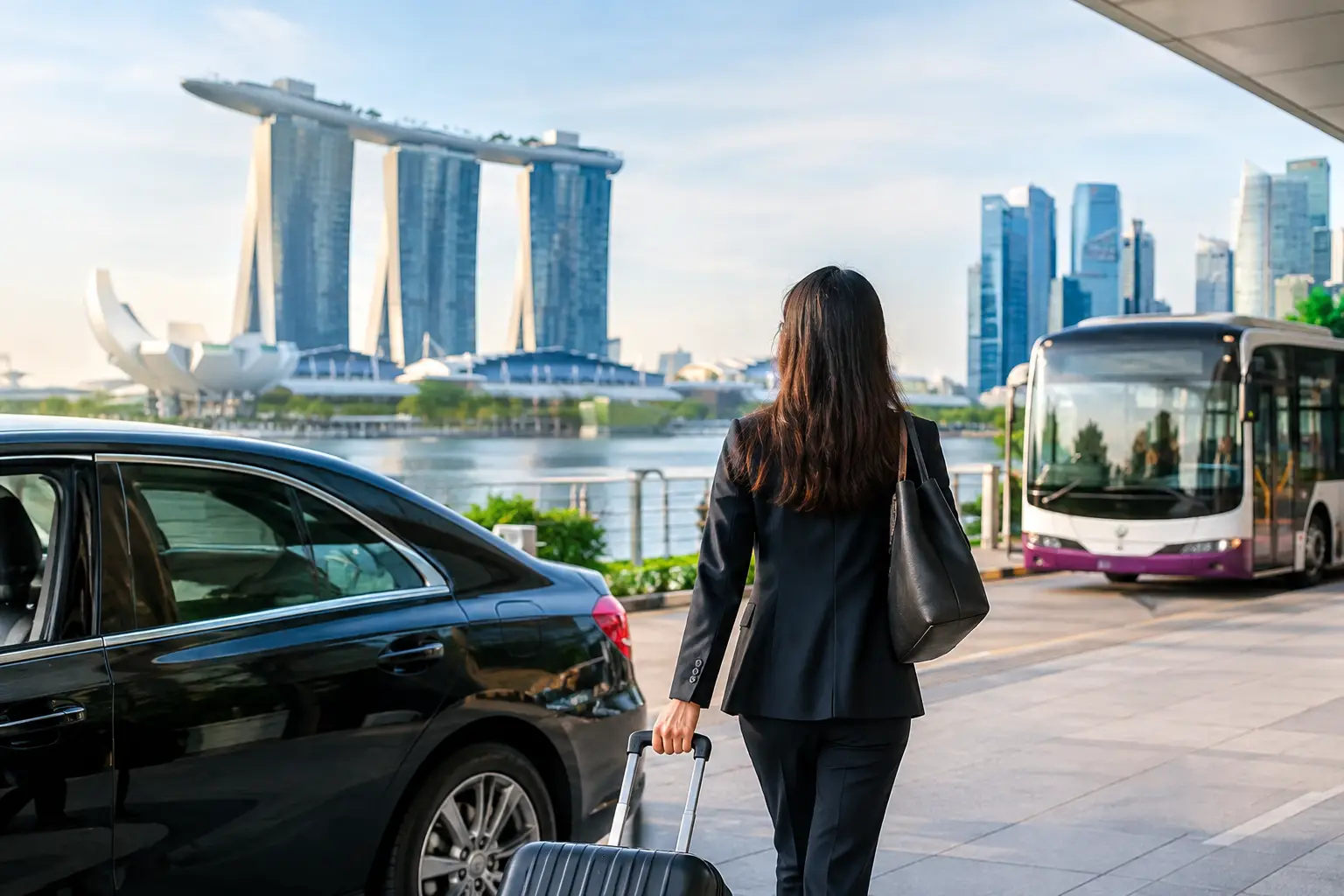
A conference schedule can look perfectly organized on paper and still fail at the curb. A delayed airport arrival, an undersized vehicle, or a shuttle that misses the morning peak can leave speakers, clients, and delegates waiting before the first session begins. The best transport options for conferences are the ones designed around movement patterns, guest expectations, and operational contingencies - not simply vehicle availability.
For conferences in Singapore, transport planning usually involves several distinct needs: executive airport transfers, hotel-to-venue movements, group shuttles, evening functions, and departures spread across multiple flights. Each requires a different level of vehicle capacity, dispatch control, and guest handling.
Best Transport Options for Conferences: Match the Service to the Movement
The right conference transport plan rarely relies on one vehicle type. A premium sedan may be the appropriate choice for a keynote speaker, while a coach shuttle is more efficient for delegates traveling from a designated hotel. The planning task is to segment travelers by purpose, timing, and service expectation.
Executive sedans for VIPs, speakers, and senior leadership
Executive sedans are best suited to one or two passengers traveling with light luggage. They provide the discreet, polished experience expected for C-suite guests, board members, diplomats, sponsors, and featured speakers. They are particularly effective for airport arrivals, private dinners, media commitments, and point-to-point transfers between a hotel, convention center, and office.
For these passengers, reliability matters as much as presentation. A scheduled pickup should account for flight status, airport meeting instructions, vehicle access at the hotel, and sufficient buffer time before a speaking engagement. Assigning a dedicated chauffeur and vehicle can also reduce friction for executives with a changing itinerary.
This option is not the most economical choice for general delegate movement. Its value is in privacy, punctuality, and the ability to manage high-touch travel without placing VIPs into a shared shuttle schedule.
Premium MPVs for small delegations and airport arrivals
Premium MPVs offer more flexibility when passengers are traveling in groups of three to six or carrying substantial luggage. They are a practical choice for overseas delegations, sponsor teams, families accompanying a principal guest, or senior staff arriving on the same flight.
Compared with booking multiple sedans, an MPV keeps a small group together and simplifies airport coordination. It also makes sense for conference teams moving between venue inspections, rehearsals, supplier meetings, and hosted dinners. The trade-off is that an MPV still operates as a private vehicle, so it becomes less cost-effective when the same route needs to serve dozens of people at fixed times.
Minibuses and mini coaches for coordinated delegate groups
For groups that need to move together, minibuses and mini coaches provide a controlled middle ground. They are well suited to airport waves, hotel-to-venue transfers, off-site activities, campus visits, and dinner transfers where group sizes do not justify a full-size coach.
This category works especially well when attendees are split across several hotels or when a conference has different attendance bands. For example, a 20-person sponsor delegation may need a dedicated mini coach, while a smaller group of organizers uses a minibus for venue runs. The benefit is coordination: passengers arrive together, organizers have a visible departure point, and the driver follows a predefined route rather than handling multiple ad hoc bookings.
Capacity planning must include luggage. A vehicle that seats a group comfortably for a city transfer may not have adequate luggage space for an airport arrival. Confirm passenger counts, baggage estimates, mobility needs, and any equipment cases before vehicle allocation.
Full-size coaches for hotel shuttles and high-volume sessions
A full-size coach is generally the strongest option for large delegate movements on a fixed route. Common examples include a morning hotel shuttle to a convention center, a lunch transfer to an off-site venue, or a closing-night return service after a gala dinner.
The advantage is not only passenger capacity. Coaches create a repeatable operating system: scheduled departures, known pickup points, manifest control where required, and a clear escalation process if a route is delayed. For a multi-day conference, a dedicated coach can also create familiarity for attendees and reduce the burden on event staff answering transport questions.
A coach is most efficient when occupancy is consistently high and the route is predictable. If guests are scattered across many hotels, a single coach may spend too long collecting passengers. In that case, several smaller feeder vehicles or separate hotel loops may produce better on-time performance.
Plan by Travel Pattern, Not Just Headcount
The most frequent planning error is selecting vehicles based only on total attendance. A 300-person conference does not automatically require several coaches. What matters is how many guests need to travel at the same time, from the same origin, to the same destination.
Start with an attendee movement map. Identify airport arrival windows, hotels, venue access points, meal functions, and departure waves. Then separate people into operational groups: VIPs, speakers, organizers, delegates, exhibitors, and staff. Their transport requirements often differ sharply.
| Travel requirement | Most suitable option | Operational priority | | --- | --- | --- | | Keynote speaker airport arrival | Executive sedan or premium MPV | Flight monitoring and discreet meet-and-greet | | Overseas delegation with luggage | Premium MPV or minibus | Baggage capacity and unified arrival handling | | Main hotel to conference venue | Coach or mini coach | Departure frequency and traffic buffer | | Venue inspection and organizer runs | Sedan, MPV, or hourly vehicle | Flexible routing and wait time | | Gala dinner transport | Minibus, mini coach, or coach | Staggered departures and clear pickup zones | | Staff and crew movement | Minibus or coach shuttle | Shift timing and reliable repeat routes |
For international conferences, arrival management deserves special attention. Flights may land within similar windows, but immigration, baggage collection, and customs clearance can vary significantly. A transport provider should have confirmed flight details, passenger names where appropriate, meeting-point instructions, and dispatcher visibility over arrivals. A rigid pickup timetable without flight monitoring creates unnecessary wait time for both passengers and chauffeurs.
Build Time Buffers Into the Schedule
Singapore is compact, but conference transport should never be planned around ideal travel times alone. Morning and evening congestion, road closures, rain, high-demand periods, hotel driveways, and venue security checks can all affect the final approach.
For VIP transfers, include a meaningful buffer before registration, rehearsals, and speaking slots. For shuttle programs, publish departure times that give attendees a realistic margin rather than a last-minute arrival. A coach scheduled to reach the venue exactly at the session start is already late from an event operations perspective.
Venue access requires similar discipline. Confirm whether buses can stop at the main entrance, whether coaches need a designated bay, and whether loading is time-restricted. Some properties have narrow driveways or separate access points for large vehicles. These details should be verified during route planning, not discovered when the first shuttle arrives.
Decide Between Scheduled Shuttles and On-Demand Vehicles
Scheduled shuttles are ideal when a substantial number of guests follow the same route. They control cost, reduce vehicle duplication, and give attendees a simple routine. They also work well for recurring transfers between an official conference hotel and venue.
On-demand chauffeur vehicles are better for executives, speakers, sponsors, and organizers whose schedules change throughout the day. They provide flexibility for early arrivals, private meetings, last-minute venue changes, or separate dining arrangements. The higher per-vehicle cost is justified when timing, privacy, and service level are more important than group efficiency.
Many conferences require both. A coach shuttle can manage the delegate base, while sedans and MPVs support senior guests and the event team. This mixed-fleet approach avoids paying for private vehicles where a shared route would work, without forcing VIP travelers into a schedule that does not suit their commitments.
What to Confirm With Your Transport Partner
A conference transport quote should be based on more than a vehicle count and a date. Give the provider the event schedule, passenger estimates by movement, hotel list, venue details, flight information, luggage assumptions, and any accessibility requirements. For large programs, ask how dispatch is managed during live operations and who can make decisions if a vehicle is delayed or an itinerary changes.
Look for clear confirmation of licensed and insured vehicles, chauffeur standards, route planning, waiting time assumptions, and the process for adding vehicles. For high-stakes programs, senior dispatch review and a defined operations contact are practical safeguards, not optional extras.
Limo Z supports conference transport with executive sedans, luxury MPVs, minibuses, mini coaches, and full-size coaches, allowing planners to coordinate VIP travel and delegate logistics under one operating plan.
The best time to solve conference transport is before invitations go out and hotel blocks are finalized. When routes, pickup points, and vehicle assignments are built into the event design early, every guest spends less time looking for a ride and more time where the conference needs them to be.