
7 Roadshow Logistics Examples That Keep Events Moving
9 November 2026
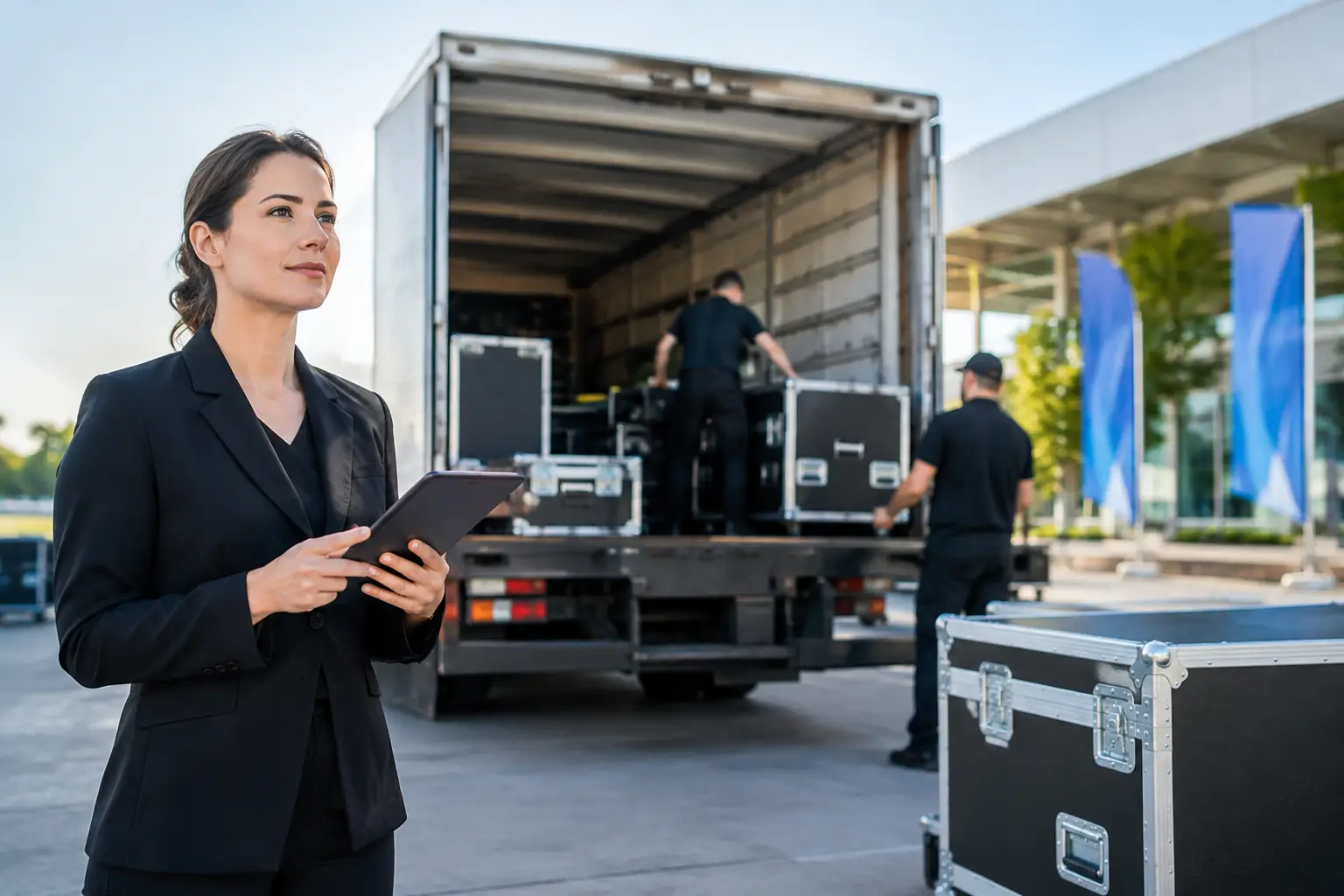
A roadshow can look straightforward on the agenda: hotel pickup, client meeting, airport transfer, repeat. In practice, the best roadshow logistics examples show how quickly timing, access rules, luggage, attendee changes, and traffic can affect a full day of executive travel. The transport plan must protect the schedule without making senior guests feel managed.
Roadshows are not standard point-to-point bookings. They are moving programs with fixed appointments, multiple decision-makers, and little tolerance for a missed transfer. Whether the program involves one visiting executive or a 60-person corporate delegation, the difference is made in the operating detail before the first vehicle arrives.
Roadshow Logistics Examples for Corporate Programs
1. Investor meetings across Singapore's business districts
A regional leadership team arrives from the United States for a day of investor meetings in Marina Bay, Raffles Place, and One-North. The itinerary includes three 45-minute meetings, a working lunch, and an evening airport departure. On paper, this requires only a premium sedan and a chauffeur.
The logistics issue is not the vehicle. It is the time protection around each stop. A well-built plan confirms the correct lobby or private entrance for every building, identifies realistic transfer windows rather than map estimates, and accounts for security registration. The chauffeur should receive the run sheet in advance, while dispatch monitors the day for changes to the final meeting or flight schedule.
For a senior executive, a dedicated vehicle on hourly booking is often the right choice. It keeps the vehicle nearby, allows documents and personal items to remain secured, and avoids the uncertainty of arranging a new pickup after each appointment. This costs more than separate transfers, but it provides control where a delayed arrival can affect a commercial conversation.
2. A product launch with VIP guests and media arrivals
A technology brand launches a new product at a hotel ballroom, with journalists, partners, board members, and speakers arriving on different schedules. Some guests require discreet airport pickup, while others need short transfers from their offices. The event organizer also needs a clear plan for departures after the presentation.
This is where vehicle assignment must follow guest type, not just passenger count. A luxury sedan may be appropriate for a keynote speaker or board director. Premium MPVs can carry small executive groups with hand luggage. Minibuses or coaches are better suited to media groups and staff moving from a remote parking area.
Arrival windows should be staggered. Sending every guest to the same entrance at the same time can create a curbside queue, confuse hotel staff, and delay the people who need to be inside first. A transport coordinator should define drop-off zones, vehicle holding areas, guest manifests, and a contact protocol for late arrivals. The departure plan needs the same attention, especially when guests leave in waves after a reception.
3. A multi-city sales roadshow with flight connections
A sales team may begin in Singapore, continue to Kuala Lumpur, and return for a final client presentation the next morning. While the flights are booked separately, ground transport needs to be treated as one connected program. Each airport transfer must protect the next commitment, not merely meet the published flight time.
For the Singapore segment, flight tracking is useful on arrival, but it is only the starting point. Dispatch should also consider immigration processing, baggage collection, the number of travelers, and whether equipment cases are traveling with the team. A group of four passengers with presentation materials may need a premium MPV even if they could physically fit in a sedan.
On the return, the pickup time should reflect the airline, terminal, check-in needs, and the consequences of delay. A roadshow team carrying samples, branded displays, or confidential materials should avoid tight transfer margins. The lowest-cost schedule can become expensive if a missed flight affects a scheduled client session.
4. Executive site visits with restricted-access locations
Industrial facilities, data centers, ports, construction sites, and laboratories create a different set of transport requirements. The main concern is often access rather than distance. Drivers may need vehicle details registered in advance, guests may require identification checks, and certain loading or pickup points may be unavailable without prior approval.
A reliable site-visit plan confirms names, mobile numbers, vehicle plate details, entry procedures, and the site representative responsible for receiving the group. It should also establish what happens if the meeting runs over. At a restricted site, a chauffeur cannot always wait at the door or circle nearby indefinitely, so the dispatch team needs a defined holding location and a clear release process.
For group visits, one minibus can simplify movement and keep the delegation together. However, two smaller vehicles may be better if participants have different security clearances or separate onward schedules. Capacity is only one part of fleet selection. Access conditions and contingency options matter just as much.
5. A conference roadshow with hotel, venue, and dinner transfers
Consider a three-day conference where overseas executives stay at one hotel, meetings take place at a convention center, and client dinners are held across the city. The transfers are short, but the program has many moving parts: different attendance lists, changing finish times, and guests who may leave early for private commitments.
The transport plan works best when it separates scheduled group movements from on-demand executive travel. Coaches or minibuses can operate fixed hotel-to-venue shuttles at clearly published times. Designated sedans and MPVs can then support VIPs, speakers, or clients whose movements do not align with the shuttle timetable.
This hybrid approach reduces unnecessary vehicle standby while maintaining a premium experience for priority travelers. It also gives the organizer a single point of operational control. Rather than calling individual drivers throughout the day, the event lead can communicate changes through a dispatch contact who can update vehicle assignments and routing.
6. A delegation program with protocol requirements
Government, diplomatic, and board-level delegations require more than punctual transport. Guest handling, vehicle presentation, chauffeur conduct, and discretion are visible parts of the program. The team may include principals, security personnel, interpreters, assistants, and local hosts, all of whom may have different pickup locations and responsibilities.
A detailed manifest is essential. It should identify each traveler, their role, vehicle allocation, luggage needs, primary contact, and any special instructions. Names should be verified carefully, particularly when airport meet-and-greet service is involved. The wrong greeting sign, vehicle mismatch, or public discussion of itinerary details can undermine confidence immediately.
There is also a trade-off between flexibility and privacy. A shared vehicle may be efficient, but separate sedans may be more suitable where confidential conversations or protocol rank require separation. A premium operator plans those decisions with the organizer rather than assuming that the largest vehicle is automatically the best solution.
7. Employee and guest transport for a roadshow activation
A brand activation may move promotional teams, equipment, and invited guests between several locations over one week. This is less formal than an executive delegation, but its logistics can be more demanding. Staff call times may begin before public transit is convenient, equipment loading may require specific vehicle types, and the team may finish late after a venue closes.
The solution is usually a combination of scheduled staff transport and dedicated vehicles for supervisors or equipment. A coach can move a large crew efficiently, while a minibus can handle smaller shifts or venue-to-venue movements. Passenger vehicles should not be assumed to carry large display units, crates, or technical equipment without confirming dimensions and loading requirements.
A daily transport control sheet is valuable for this type of program. It should cover the following five items:
- vehicle and chauffeur assignments
- pickup and drop-off points
- shift-based passenger counts
- loading requirements and venue access times
- escalation contacts for schedule changes
The control sheet should be reviewed at the end of each day, not only before the roadshow begins. Real conditions at the first venue often reveal a better pickup point, a slower loading process, or an attendance pattern that changes the next day's fleet requirement.
What Strong Roadshow Transport Planning Looks Like
The common thread across these roadshow logistics examples is disciplined coordination. A transport provider needs more than a fleet list. It needs a confirmed itinerary, realistic routing, named contacts, suitable vehicle assignments, and an escalation process when the day changes.
For small executive programs, this may mean one chauffeur, one vehicle, and active dispatch oversight. For a larger corporate roadshow, it may mean manifests, multiple fleet categories, staggered arrivals, venue coordination, and a transport desk that can respond without creating noise around the guests.
Limo Z approaches roadshow transport as an operational program rather than a collection of individual rides. That distinction matters when travel is tied to commercial meetings, high-value guests, or event deadlines. Build enough time into the plan to absorb normal disruption, then make the guest experience feel calm, discreet, and exactly on schedule.